

Why are forgotten civilizations so ubiquitous in our stories?
Humanity has, for all of written history, always lived in the ruins of the past. The Pyramids of Giza were more ancient to Cleopatra than she is to us, and the Egyptians who built those pyramids were far from the first people in the area. It’s constant in our stories too, common throughout stories from all over the world: myths of the Holy Grail in Europe, or The Peach Blossom Spring in China.
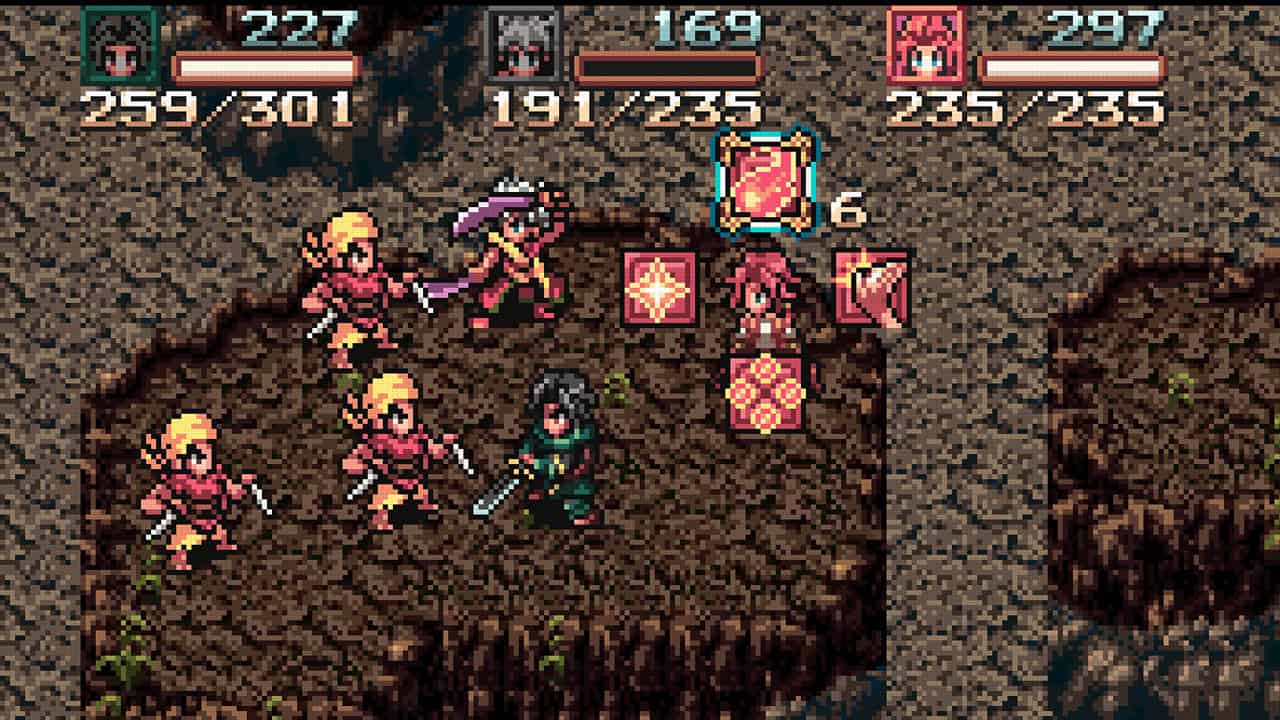
The modern version, the kind that captures my imagination, shows up now as an RPG staple. The ones where you uncover hidden truths about the world by exploring these ancient ruins, acting as archaeologists, just to find that this dead civilization still lingers. Black Sigil: Blade of the Exiled connected with me in spite of its varied flaws and rough edges because it leans into this investigative theme and lets you uncover the past with your own hands.

Black Sigil: Blade of the Exiled is a 2009 Nintendo DS game developed by the Montreal-based Studio Archcraft, in the mold of mid-90s Squaresoft RPGs Chrono Trigger and Final Fantasy VI. You may have heard of some more recent games aiming at the same mold from a similar Western perspective, such as Sea of Stars and Chained Echoes; but Black Sigil is older now than Chrono Trigger was when Black Sigil was released. Black Sigil was looking backwards when it came out, but now we’re looking back at a game with its eyes on the past, both in-story and out.
Black Sigil opens on an isolated island nation called Bel Lenora, a small place with just three towns and cities, where everyone’s able to use magic except for your main character, Kairu. Throughout the opening of the game, you learn little tidbits of your civilization’s history, in between learning just how much people hate you and consider you cursed for your magical inability. After some introductory quests, you and your sister get teleported to the larger world, which you had no idea existed.

The world you knew was built upon the commonality of magic use among its people, as shown in infrastructure, folklore, and religious traditions, but when you get to the larger world, you see it’s shaped by the absence of magic. It’s an inversion where, just as absence of magic is viewed as a curse in Bel Lenora, the world at large views magic use just as suspiciously. It’s not that this is such an original concept, but I like the straightforward parallelism of the way it’s told initially here, and how that mirror image gradually fades to the background as the plot takes off.
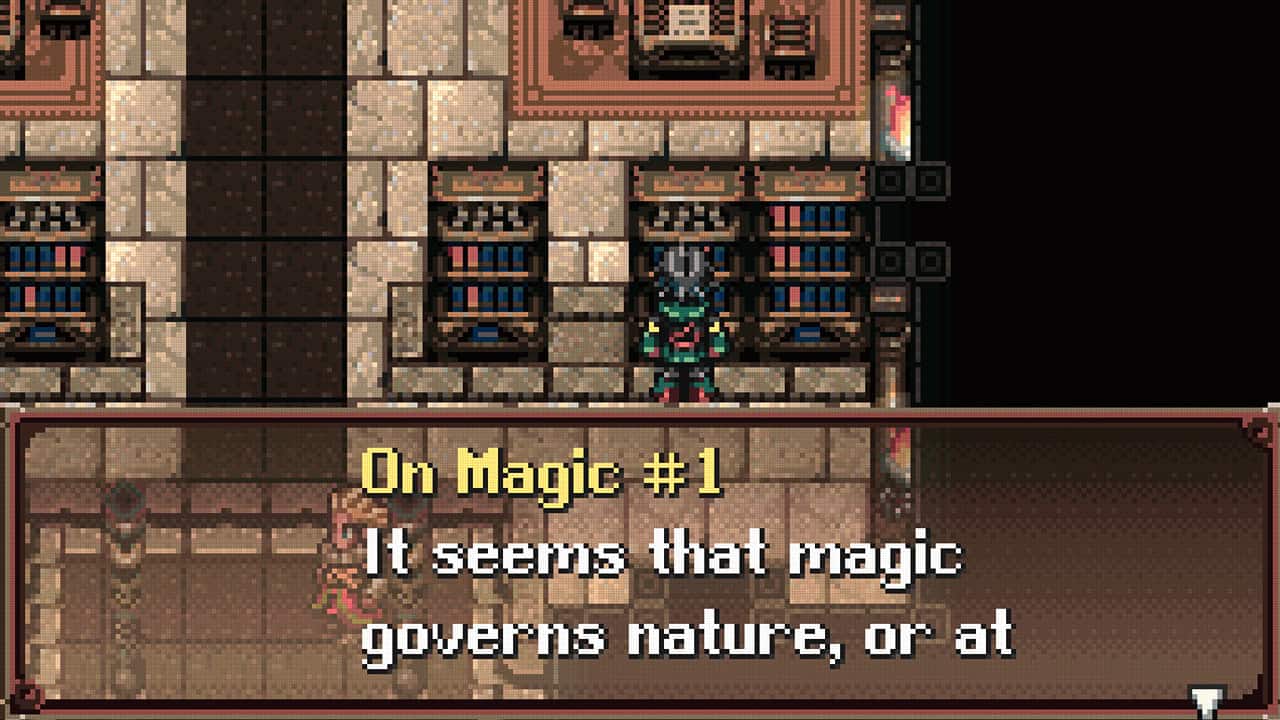
That’s where all this ancient civilization stops being context and becomes your primary driver. The first half of the game you were on the run from a domineering empire, but now you start delving into sealed libraries and high-tech ruins, complete with puzzles and traps and floating platforms galore. It’s so much fun to be the one doing the exploring, grabbing artifacts or trying every bookshelf in a new location to see if you can glean something; I’d guess at least 60% of the bookshelves in the game are interactable and loaded with foreshadowing, which is enough for me to try them all.
Again, this isn’t rare for these types of games. Star Wars: Knights of the Old Republic (my own formative experience) features delving into histories and archaeology heavily both incidentally and in the storyline, and I mean, hell, is there a Dragon Quest that’s NOT about finding ceremonial ancient armor to kill the big evil guy? That’s even just limiting ourselves to RPGs! There’s not even anything novel about Black Sigil‘s take; it’s just done well, with an uncommon focus on using these ideas to tell a specific story with a specific point.
It’s wonderful to experience a story about unearthing the forgotten sins of the past presented in the style of our real past. There’s just something to that parallel that feels so meaty, so fun to interrogate. The SNES may not be as ancient or advanced as the fallen civilization in the game, but it can feel worlds away these days, and in 2009, long before 2D RPGs took up residence on home consoles again, the high-budget RPGs of the 90s must’ve felt like Ancient Egypt. Nowadays we’re pretty flush with games like Black Sigil, and retro throwbacks of all stripes and levels of authenticity. We’re lucky for that, even though most of them don’t work for me, I really think Black Sigil was doing something special at the time.
I wouldn’t call it a masterpiece, but Black Sigil is absolutely a worthwhile game to play. Its slavish devotion to SNES-era norms results in quite a bit of friction, but shouldn’t exploring the past feel perilous? What’s really important is it stoked my imagination, got me to think, and has me hungry for more research about Atlantis-type myths, and that’s the best feeling art can give you.
 ObserverCrew Picks
 bserver
 bserver