I’m no horror aficionado. I think the sum total of horror games I’ve finished is An Outcry, the Faith trilogy, and Silent Hill (and that was just a week and a half ago!), and my track record with movies is no better. The only horror movie I’ve seen in the past ten or so years is Barbarian, and hell, I’ve never even touched a Resident Evil game. I’ve known about Sweet Home, both the 1989 film and its tie-in JRPG, for years, but I’d always assumed it’d be too callow and half-formed to really work for me. Still, I booted it up on a whim last weekend, just to see if we would click at all. It’s the week leading up to Halloween in the US after all, and I’d just finished Silent Hill and had a good enough time. Who knows, maybe the RPG mechanics would be enough to let me love it!
Before the game, Sweet Home was first a 1989 horror movie directed by Kiyoshi Kurosawa, mostly known for Cure. It’s a pretty simple haunted house story, where a small film crew takes up residence in an abandoned, cursed mansion. Our crew consists of producer Kazuo, director Akiko, cameraman Taguchi, reporter Asuka, and Kazuo’s daughter Emi. They’re working on a documentary about a local artist, Ichiro Mamiya, and this abandoned mansion belonged to him and his wife, who disappeared in it 30 years ago. Several frescoes from the late artist are rumored to be gathering dust in the mansion, and once our crew manages to get in and get some power running, they go to work cleaning up these lost works.
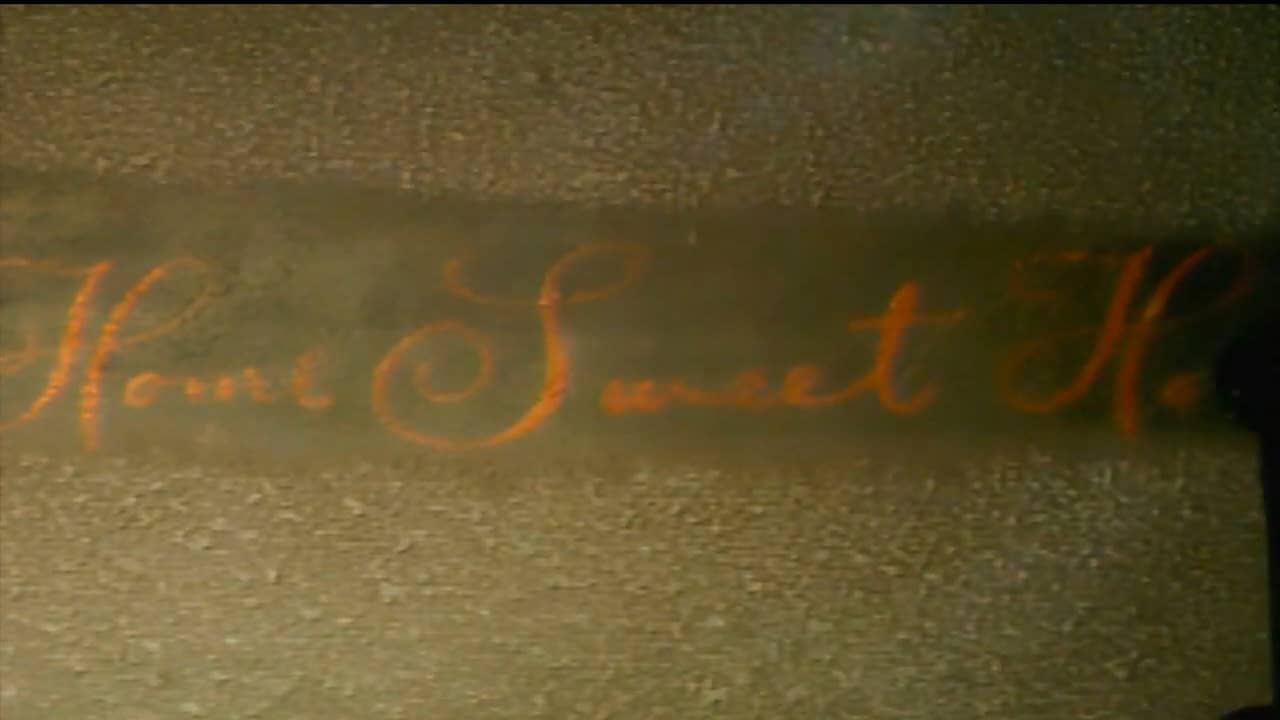
It turns out Sweet Home is exactly the rare horror movie made for me. It’s not loaded with cheap scares, instead being focused on four or five extremely impressive effects sequences that all manage to be gory in a fun way rather than a gross way (with one potential exception, but even that one’s kinda just impressive). It’s not the most inventive story out there, but everyone in the crew (both on and off screen) has done such a wonderful job that it can’t be anything but a joy to experience.
Besides the director, other collaborators of note are: Dick Smith, makeup artist on the film (famous for The Godfather and Taxi Driver, among others); Masaya Matsuura, composer of the soundtrack, famous both for being half of Psy・S and for creating PaRappa the Rapper; and producer Juzo Itami, famous for directing Tampopo and many other movies.
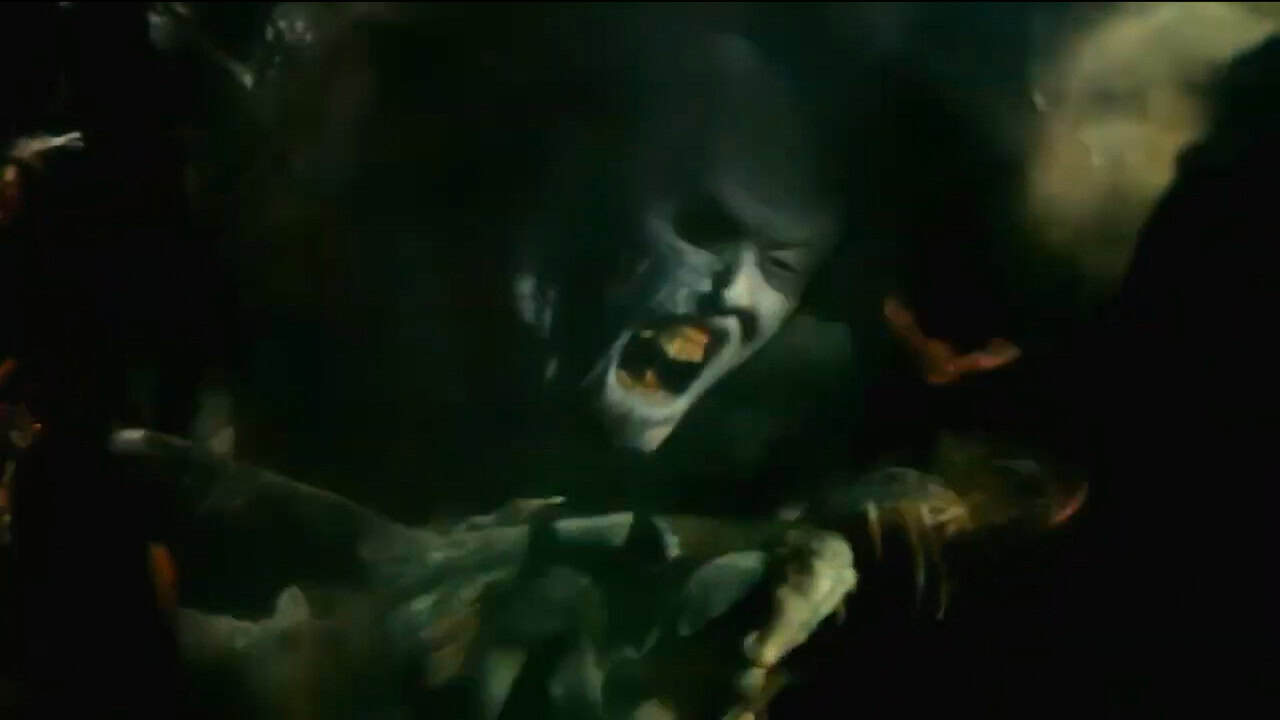
Itami’s contribution is a contentious one. He appears in the movie, but also decided to re-edit the movie for its home release after the theatrical run finished. This prompted a failed lawsuit from Kurosawa that left the film’s rights in such a messy place that it’s never been rereleased. Its original VHS and LaserDisc release, which is Itami’s version, has practically been disowned by Kurosawa since he’s gained proper auteur status. It’s a real shame; the directing seems incredible even with the heavily compressed LaserDisc image, and these effects deserve a proper high-res scan.
In a sense, Itami killed the film’s legacy. It’s very nearly lost media at this point. However, his other contribution cemented the film’s legacy. It seems he approached Capcom to make a video game tie-in while the movie was in production, and Capcom handed the project to Tokuro Fujiwara. Fujiwara toured the film studio, was told by Kurosawa to feel free to take some liberties with his adaptation, and got to work.
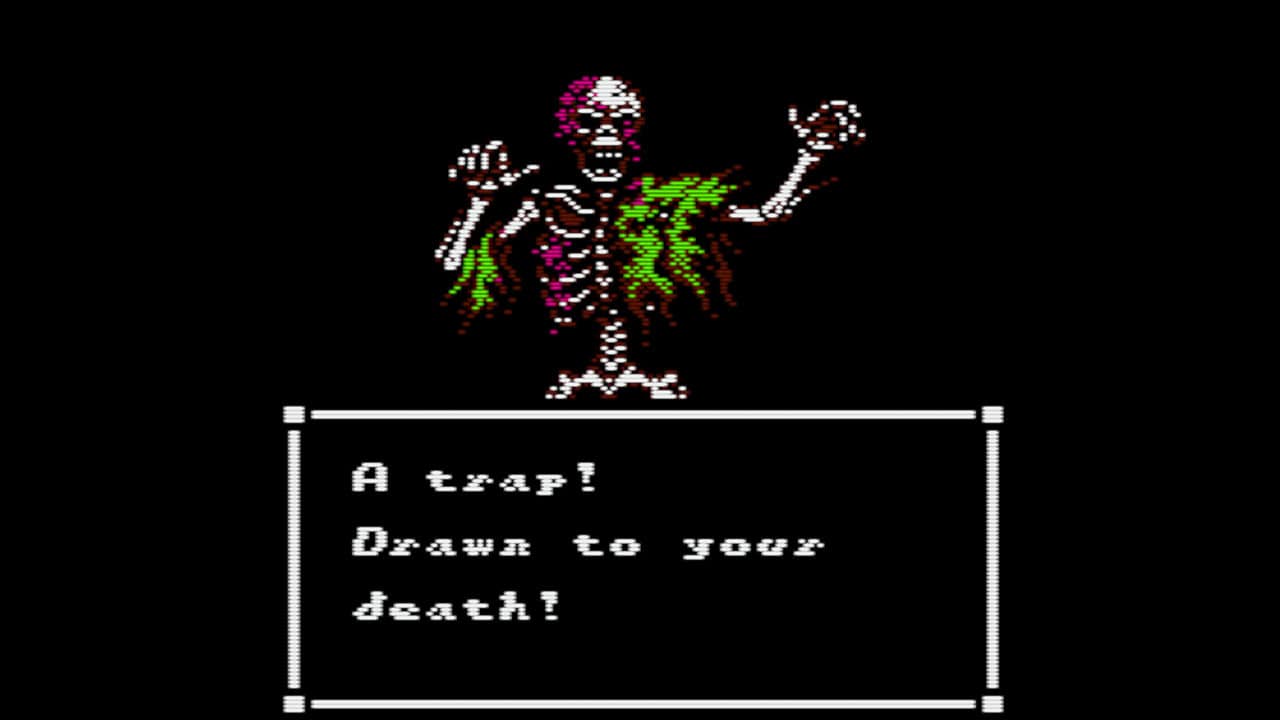
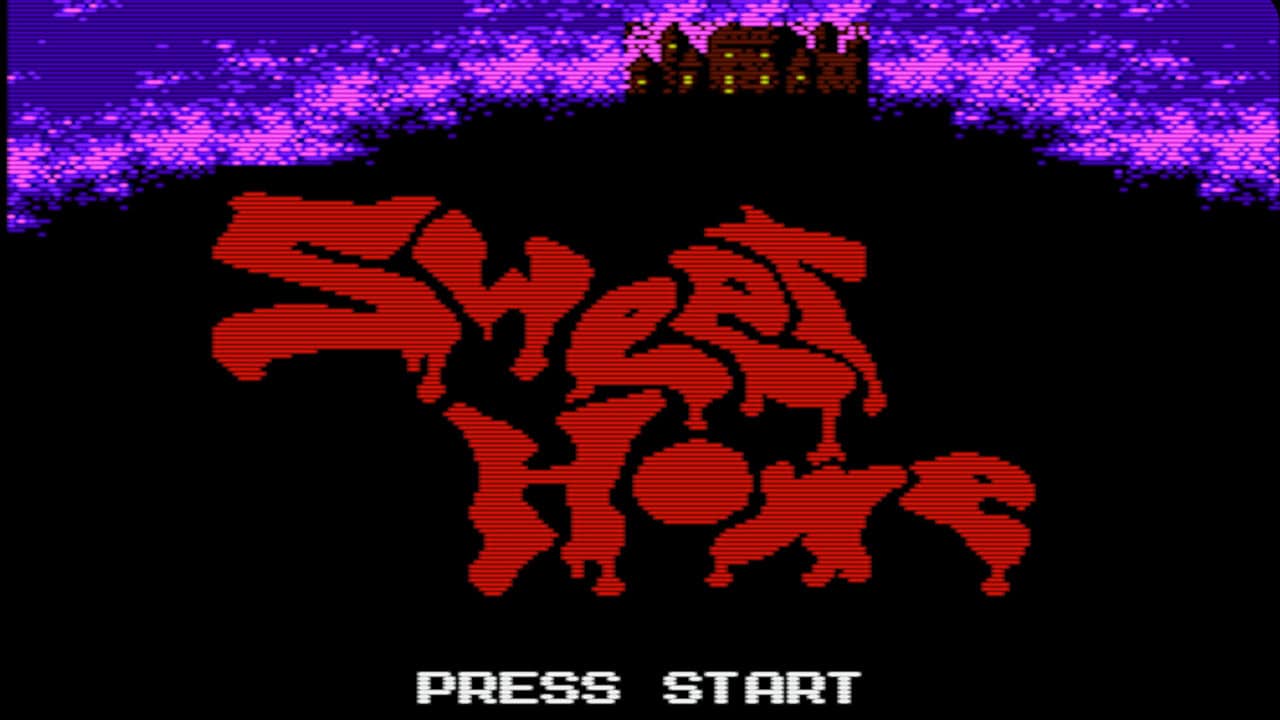
Sweet Home for the NES expands on the film’s plot pretty heavily. In the game, your crew (the same characters, though the fan translation renders Taguchi’s name as “Taro”) become trapped in the mansion after entering, and must explore the mansion to find the way out. Each of them has one permanent item, two other item slots, and one weapon slot. You’ll create small parties to explore the mansion, of no more than 3 people each, and will have to use each character’s unique abilities, as well as the many items you pick up, to pass certain barriers.
The item/ability gated progression is reminiscent of that overused modern term Metroidvania, what with the game’s mansion being an interconnected maze of impassable hazards and doors locked from the other side, but I found the puzzles leading to progression to be very clear. I do wonder if this adventure game “hint and explore” design is an inheritance from Dragon Quest’s roots in that genre, though it seems more likely to come from the earlier horror game Maniac Mansion. Wherever it comes from, the maze design in the mansion is top-notch, always feeling larger and more open-ended than it really is.
Honestly, the fact that the game is an RPG is kind of strange to me, but a welcome kind of strange. The RPG elements aren’t all that difficult or complex (intentionally, as indicated in the manual), but they do raise the stakes nicely. The first time you encounter an enemy, you’re likely to get hit very hard and need to use your strongest attacks en masse to push through them. You’ll get stronger quickly enough, and after a few fights with each enemy you’ll be cutting them to bits before they can so much as sneeze at you.
What’s most curious about that combat design is how it works to create a similar tone to the movie, despite letting the characters cut down zombies with swords left and right. The movie’s characters are much more standard slasher movie fare, only ever succeeding with wit and trickery, and actually displaying obvious incompetence with weapons.
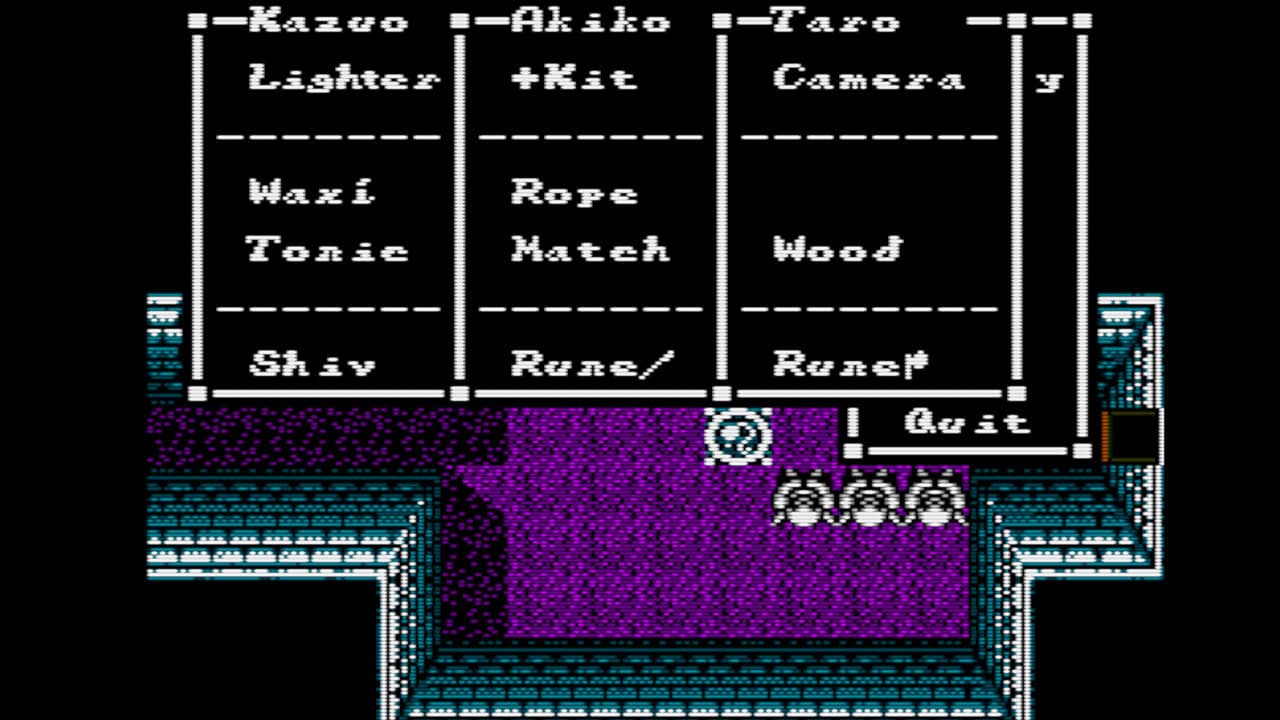
I think the prime reason it works is a lack of safe places. There’s a rather limited number of healing items in the game, and no other way to restore health than to use them. Plus, if any party member dies, they’re gone for good, and now you need to both find an item to replace their unique ability AND carry it around despite having two fewer inventory spaces total. The stakes are always high, and every point of damage counts. That interplay between the puzzly, interconnected world, and the permanence of damage is where the survival horror of it all really emerges.
There’s also plenty of references to the movie, outside of the loosely similar plot. Things like how, as you’re walking around, a chandelier can fall on you (a direct reference to a scene in the movie), or how sometimes the floor will fall out from under you (also directly referencing the movie). The best reference is the couple of enemies that are direct visual references to the animatronics in the movie. The work done to replicate those designs behind the NES’s suffocating hardware limitations is awe-inspiring, particularly the sprite for Lady Mamiya.
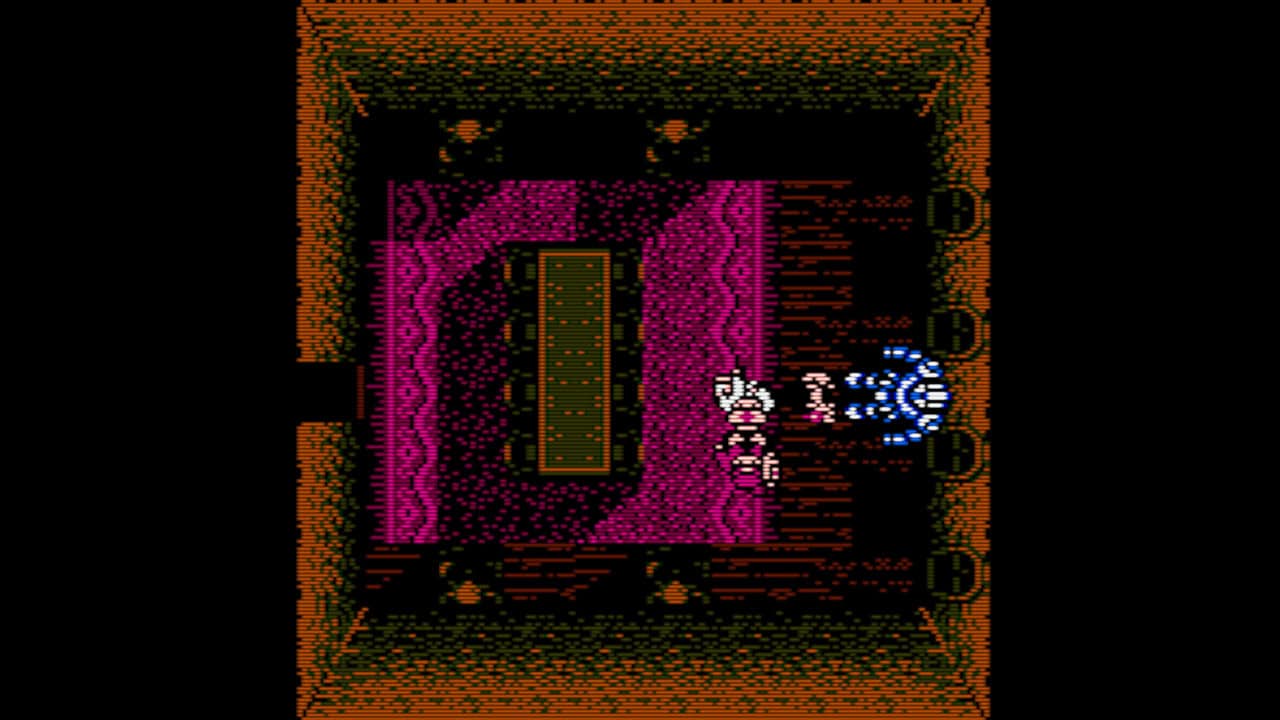
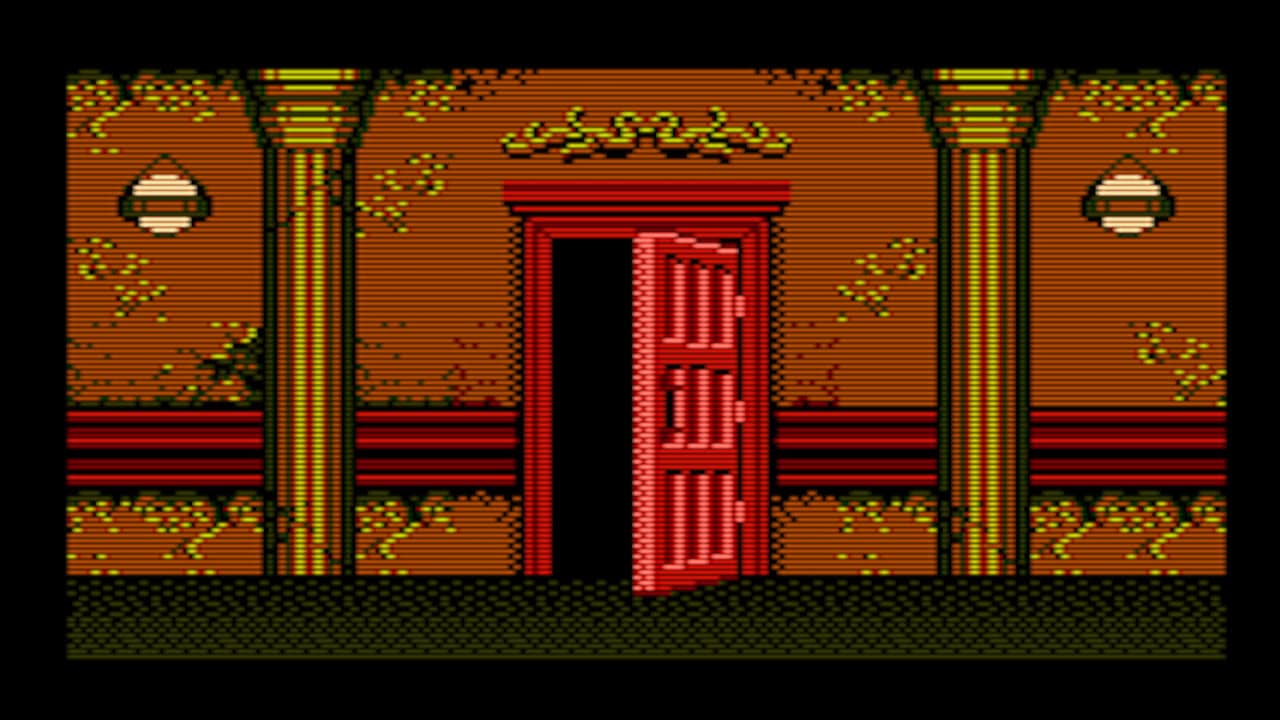
Honestly, this could be my favorite-looking NES game. The sprites are all incredibly evocative (with my personal favorite being the Skeleton enemy), and the color selection avoids the occasional muddiness of NES color palettes for vibrant purples, greens, and oranges. Really, the only visual complaint I could see is that your character sprites just get rotated for all the different directions you can walk, but that feels almost too minor to mention, if not having a certain charm. It also all feels snappy and quick, which is rare among its contemporaries. Menus load quickly, combat moves speedily, and while the menus are a bit clunky, they could certainly be much worse. It’s a joy to play even with modern hands, or at least with my hands.
If you’re at all interested in anything I’ve mentioned here, I highly recommend giving it all a go. The movie’s LaserDisc version is easily found in online spaces these days, and I highly suggest the horror-inclined (or campy-horror-inclined) to give it a gander. The game’s English translation is also very well done, and there’s even a translated manual! I think an even trade would be all of you readers and horror fans try Sweet Home out, and I’ll finally play Resident Evil sometime. Maybe next Halloween I’ll even put out a companion piece to this! It’d be so fun to trace the lineage of Resident Evil‘s famous mechanics back through the game and the movie.
 ObserverCrew Picks
 bserver
 bserver