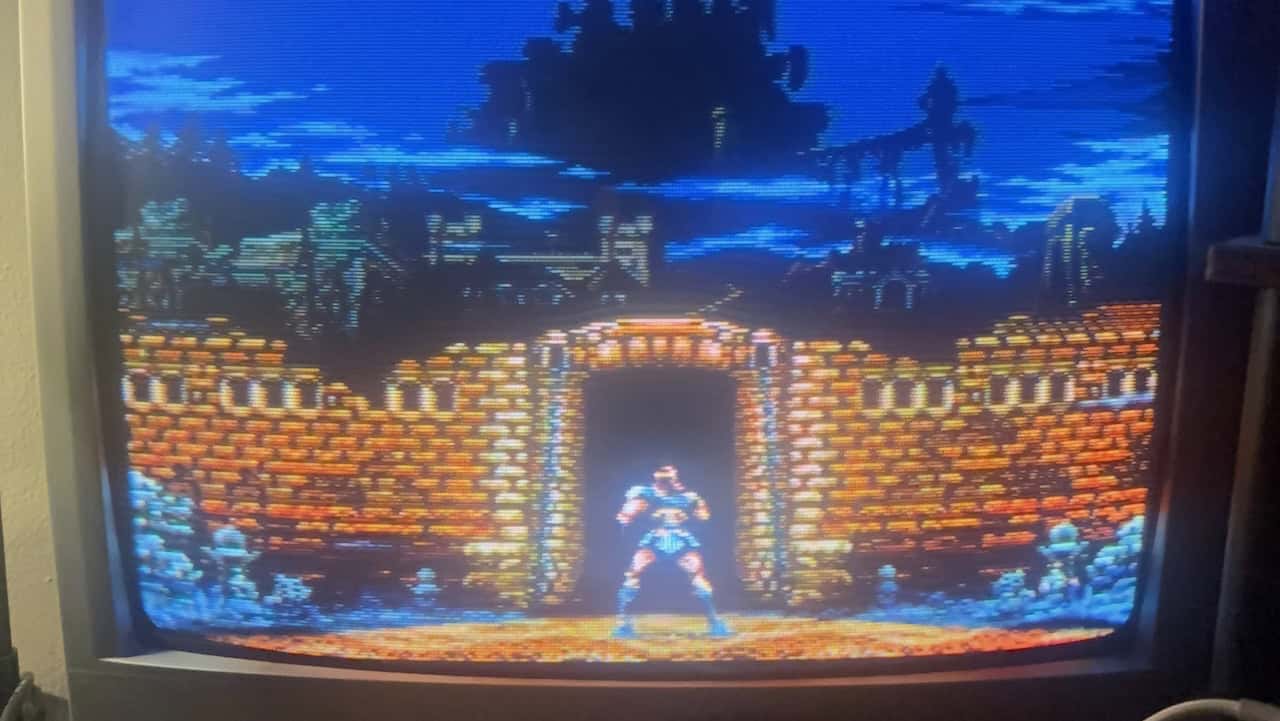
There’s a bit of a CRT television craze going on right now in the retro gaming market. There are quasi-viral videos comparing how Peach looks in Super Mario RPG on LCD vs. CRT; prices of even the most budget CRT sets have risen from “just take it off my hands” to “100 dollars”, and membership on r/crtgaming has more than doubled since 2023. Anecdotally, a lot of the recent craze has been focused on the transformative effect the CRT technology has on low-resolution images, similar to the famous effect where the waterfalls in Sonic the Hedgehog were dithered in order to appear translucent.
Well, I’m here to tell you, after years of being a skeptic, those videos are actually underselling the effect. Media from pre-2006 was almost exclusively created with this technology in mind, and our sharp, pixelated versions are a poor simulacrum. That’s not coming from a place of nostalgia either. I grew up playing Xbox 360 on LCD screens. The only CRTs I saw growing up were in school, and honestly I never clocked them as any different. Sometime in High School, I started becoming obsessed with retro tech. First with vinyl records, then dipping my toes into vintage games. Even as I dove further and further in, I never even dabbled with scan-line filters. Over the last few years, I’ve gotten fully sucked in, and could not have been more pleased when I plugged my Super Nintendo into my brand-new 30-year-old CRT from someone’s garage.
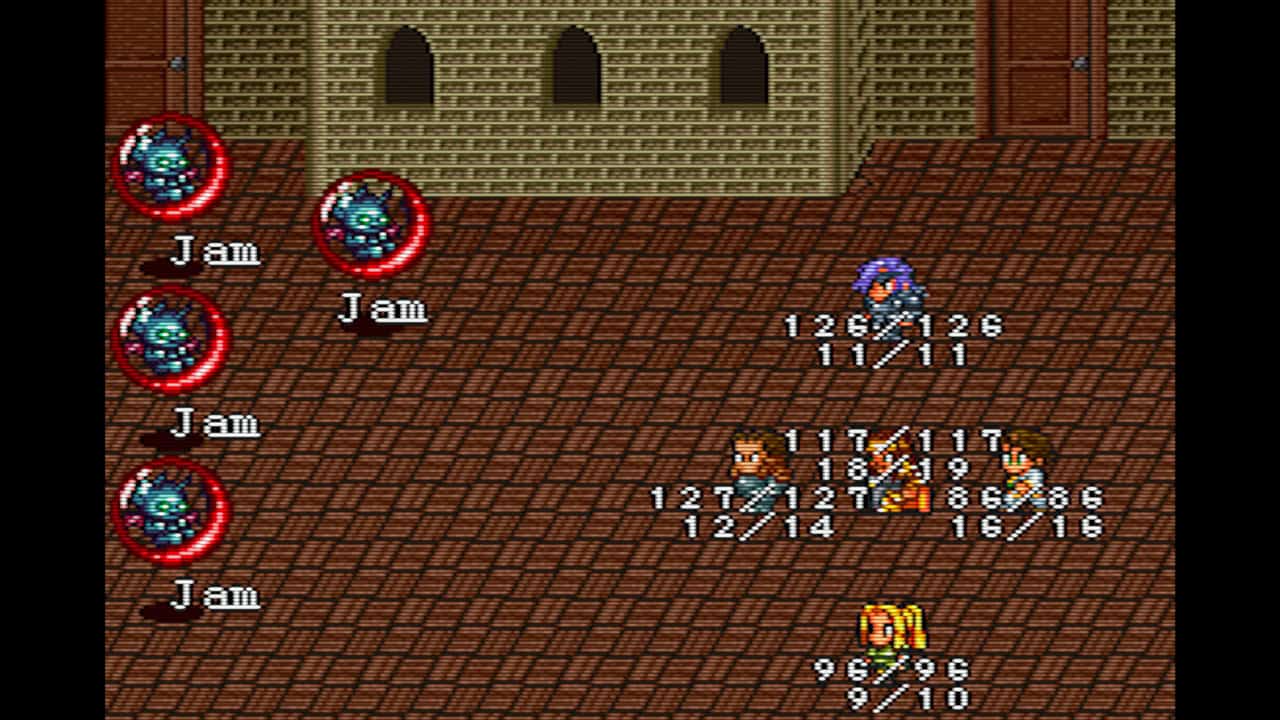
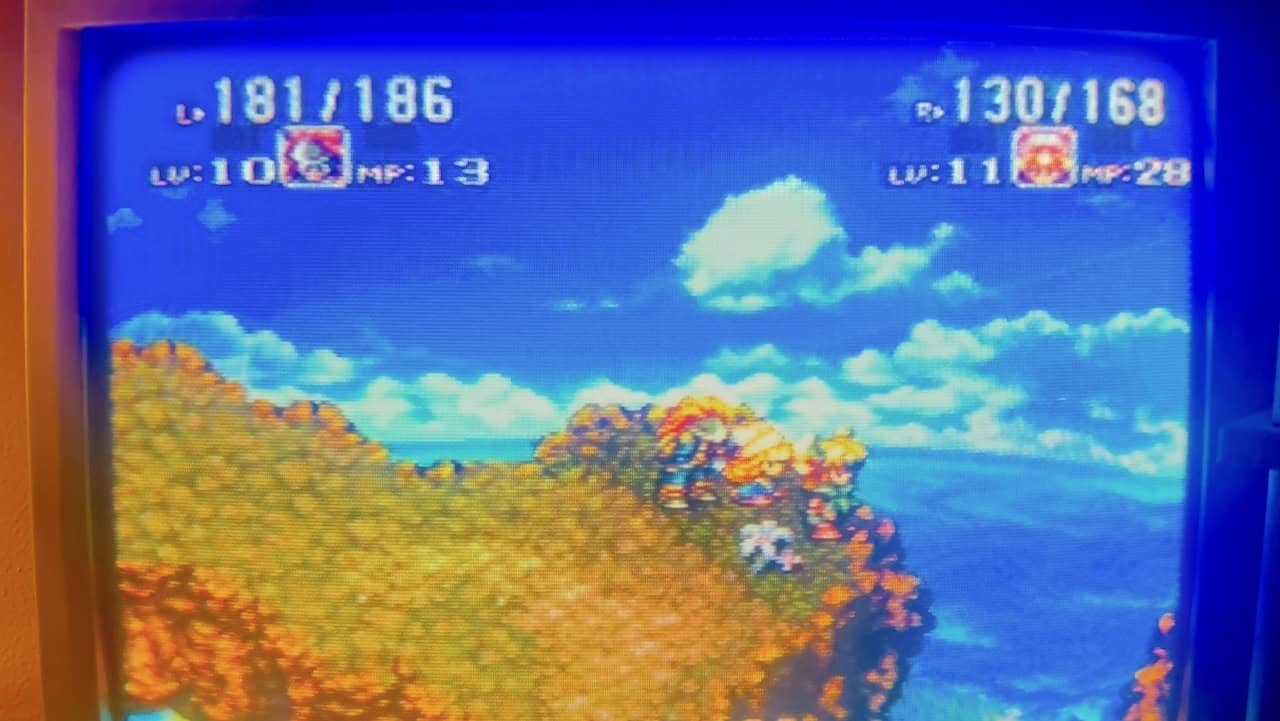
(Note: I did my best with these images of CRTs, but even with a lot of editing, these photos don’t nearly capture how good the screens look in real life. You’ll have to take my word a bit here)
Without getting too into the weeds, CRT TVs (Cathode Ray Tube Televisions, often called Tube TVs) were the only displays available to consumers for around 80 years, from their 1934 commercial introduction by Telefunken to the widespread adoption of widescreen LCDs in the mid-to-late 2000s. They were big glass gas-filled things, with an “electron gun” at one end and chemicals painted on the other end. When a TV signal was received, the gun fired electrons at the picture end, causing those chemicals to light up, with different colors depending on the signal. Here’s some more detailed information on this process if you’re hungry!
Their resolution was often measured in kHz, with 15kHz being equivalent to 480i (equivalent to 480p, but only sending every other line of pixels each frame), and 31khz supporting 480p. That 480p was mostly relegated to computer monitors, for higher readability, while televisions made do with the lower, “flickerier” resolution. To make things even more complicated, video game consoles up until the Sony PlayStation 2 would “hack” that 480i resolution to send a higher frame rate signal at 240p, both for improved responsiveness and to save computing power. All of this resolution funkiness has historically made vintage hardware a pain to use with modern displays, but that’s a topic for another day.

What matters to us is that those chemicals on the screen, combined with those funky resolutions, had idiosyncrasies that are hard to recreate accurately on a digital screen. Bright spots bleed, those skipped lines in 240p leave blank spaces in between them, and even colors pop more vibrantly than most modern displays.
I’d say the developers intentionally used these factors to make art look more detailed than the pixel density allowed, but I imagine the truth is that the art for these old games was simply created on these displays. Masters of pixel art at the time weren’t creating sprites with sharp pixels; they were strategically placing pixels and watching what happened to the final output. If you’ve ever noticed modern games with a pixel art look don’t often match the “vibe” of older games, my guess is that’s because that art was created on a digital display.
Unfortunately, there are some challenges to be had with setting up a CRT in your own house. First of all, do NOT buy one that needs to be shipped to you, especially not a nice one. It’s very tough to pack these big glass tubes in such a way that they won’t get smashed in transit, and almost nobody does it right. Even when you find one locally, you’ll find it’s heavy like bricks, gigantic in all dimensions, and that it makes a high-pitched whine when it’s on. You see, that 15kHz I mentioned earlier is well within the range of human hearing, and the electron gun will make a sound when it’s on.
I was personally caught way off guard when I bought one, found out a 20-inch CRT is a much larger screen than a 20-inch modern display (due to aspect ratio math), and also found out I apparently can’t hear 15khz very well anymore. You see, when I turned it on for the first time, my partner asked if I heard that high-pitched noise, to which I responded: “What high-pitched noise?” So if you’ve been to a lot of loud live shows, you probably don’t have to worry about that (or if you get a 31kHz screen, which is far outside the bounds of human hearing), but otherwise be warned! Luckily for me, my partner’s very accommodating to my hobbies!
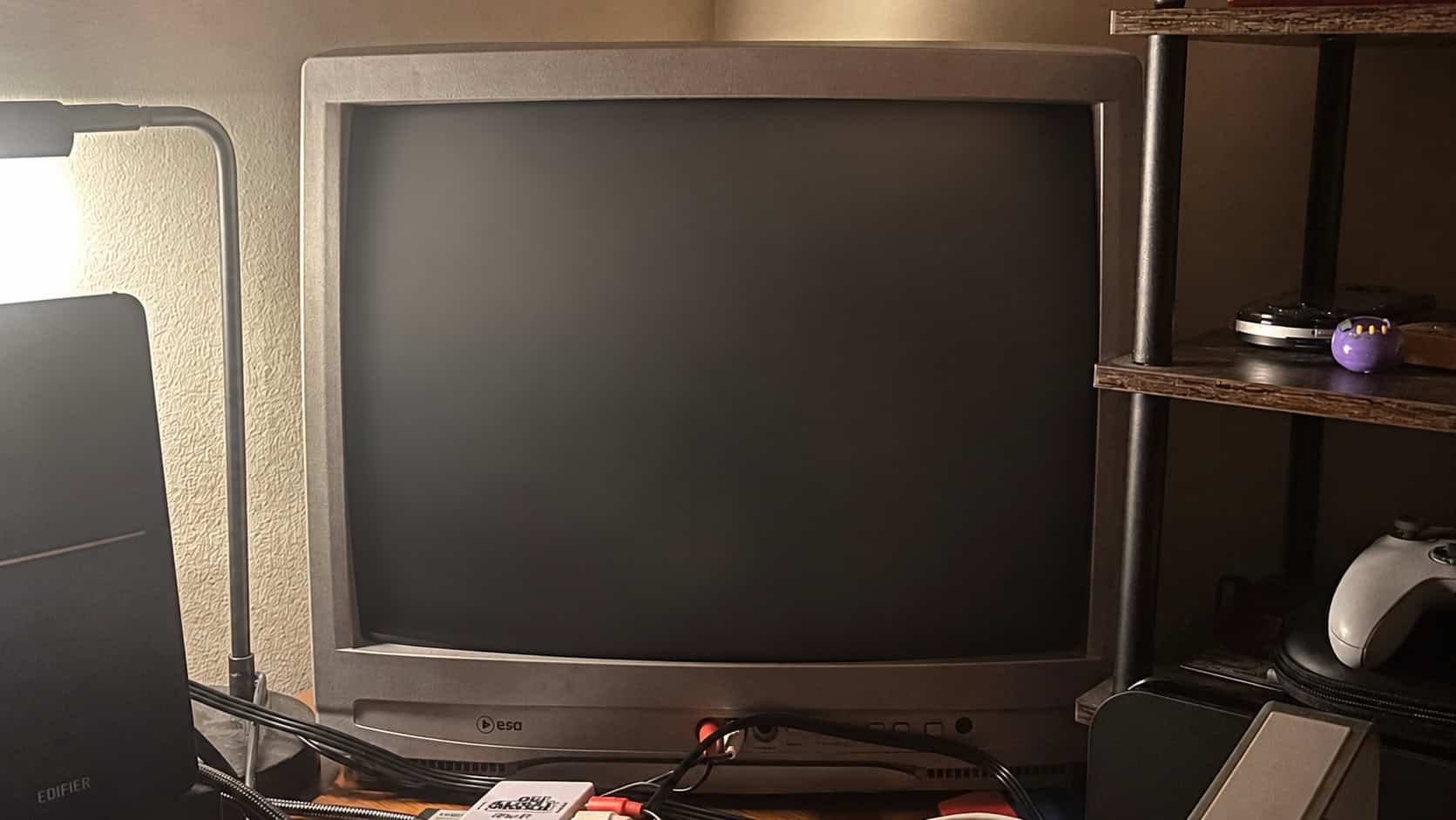
Even beyond that, you’ll find using emulators with the thing is a bit of a pain. Any budget-priced HDMI-to-analog-video converter will only output 480i, not 240p, which won’t look quite right for proper retro games. There are a couple of options you have, from buying a 6th gen console that can emulate most of what you want to play, to balling out and buying one of every old console and every game you want, to setting up a RetroPie. You could also get a line decimator, like a GBS-C, but those get pricey quick.
Personally, I’ve got a mix of the first two solutions, running a real Super Nintendo and Sega Dreamcast and Sony PlayStation 2 into it, but also using my PlayStation 2 for PlayStation 1 games and my Nintendo Wii (the most recently released console with proper 240p output) for anything I don’t own, from Nintendo to Sega CD. The only real gap I have right now is with Sega Saturn games, which is a shame. The Saturn is known for having some of the most beautiful pixel art ever released, but it’s a pain to emulate and an even bigger pain to get one.
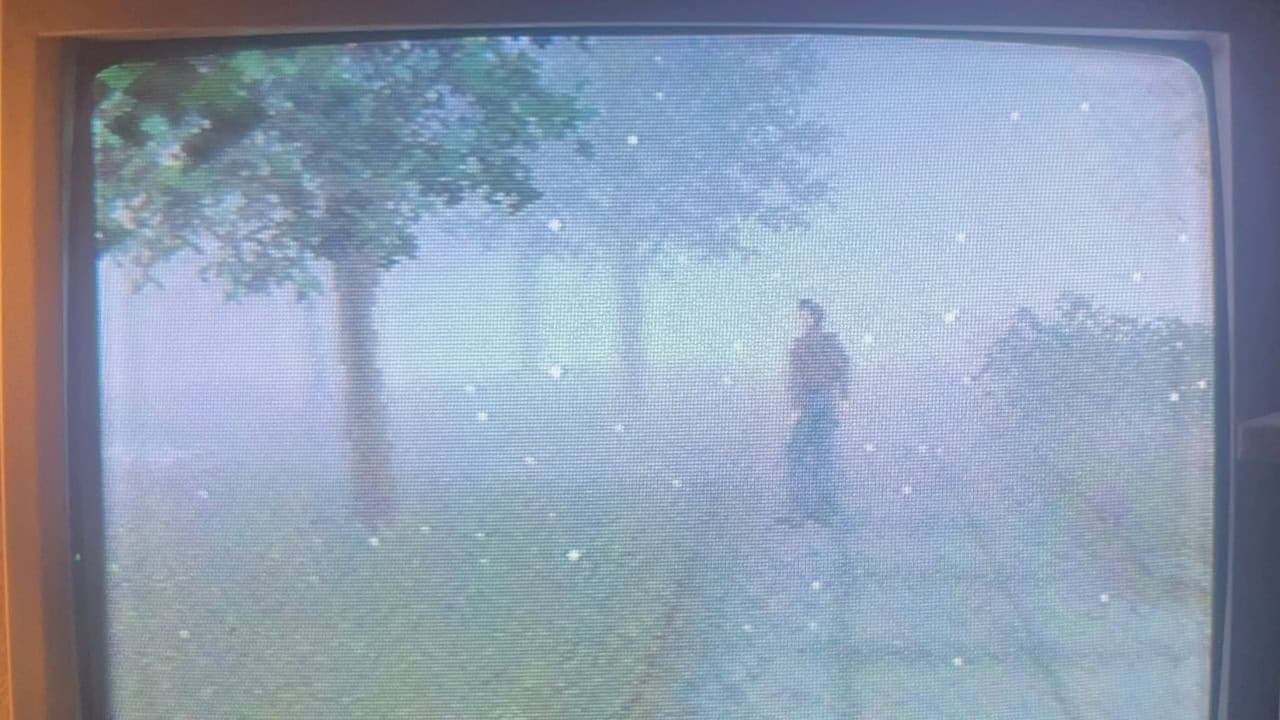
Even simpler consoles’ games have an added charm and sharpness on these displays. When I booted up Final Fantasy II on my Wii’s Nintendo emulator, I was almost annoyed at how sharp the pixelated text was, and how much depth the colors and small amount of pixelated shading were able to provide. It certainly feels less necessary for these simpler games in a way, as the blending can only do so much when you can only have 8 colors on screen at once, but it’s good enough to try game by game, especially for later Nintendo games like Dragon Quest IV.
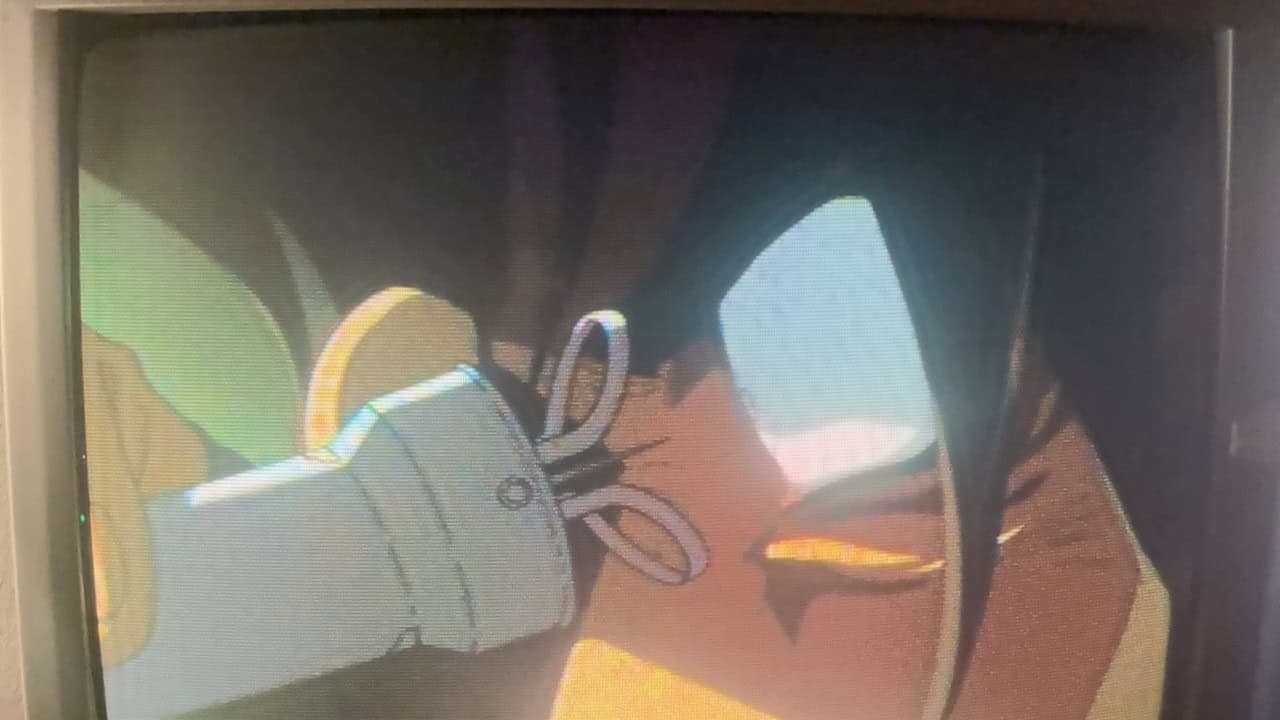
An even more unexpected result for me was how good low-resolution 80s anime looks on the thing. I’ve never liked backing up long TV shows on my computer because of the massive amounts of space 120 episodes of HD video takes up, but with the blending and blurry-sharpness of this screen, 480p video (which looks totally fine at 480i through that cheap converter I mentioned above) looks beautiful, like the information lost to resolution is being regained via the screen’s unique bloom effect. I’d even say something like Cowboy Bebop or Serial Experiments Lain recover something lost in an HD digital version, though exactly what is hard to say. It’s akin to what film grain adds to a movie, or the warmth of a vinyl record’s playback.
If this sounds enticing to you, and it’d fit into your space, I’ve got a couple of tips: First, as I said above, don’t try to size it based on your computer monitor. A 20-inch CRT is big enough for a small room, and a 17-inch CRT is as big as I’d go for a desk. Most 90s PC monitors were around the 15-inch range. Second, don’t stress too much about video inputs, but stress a little bit. If the TV only has coaxial input, like you’d screw a TV antenna to, I’d skip it. If you can find something with composite or S-video (or if you’re really lucky, component!), I think you’re golden. Third, don’t worry too much about slight picture warping. You can use the 240p test suite to test the display a bit, but it’s easy to screw things up once you get into the service menu, so if it looks fine enough, it looks good. Finally, and most importantly, do NOT take it apart unless you know what you’re doing. These devices can store very high voltages for a very long time, and inside you never know for sure what’s safe to touch and what has 30 kilovolts running through it even when unplugged. Don’t be too scared to get one because of this; they’re plenty safe as long as you don’t go monkeying around inside. Just keep it in mind.
I’m surprised I’m recommending this, but really, go get a CRT if you’re interested. It doesn’t have to be nice; it just has to be near you, and if you’re not happy with it, you can sell it for the same price. The unfortunate truth is that these TVs aren’t being made anymore, and most likely will never be made again. The infrastructure that supported their manufacture is long gone, and they only made sense at massive scale. Go get one before prices rise even further. On the bright side, though, there’s more options than ever for viewing whatever you want through a CRT, from watching Twin Peaks to playing Castlevania, and they were such constant devices for so long that they’re pretty easily found secondhand. If you don’t believe me, believe my friend (and fellow writer) Jarsh, who says, “I mostly got [my CRT TV] because I wanted to push back against the continuing trend of companies not letting you own anything. I wanted an option to play retro games as intended, and to eventually introduce my son to a variety of options outside of the modern gaming ecosystem.” Help preserve the intended viewing experience! For the kids!
 ObserverCrew Picks
 bserver
 bserver