
Western RPG video games have always stayed closer to their tabletop roots than Japanese RPGs. Not only is there a huge lineage of many of the most popular and most influential Western RPGs like Baldur’s Gate being literal adaptations of Dungeons & Dragons (D&D), but even the games that exist outside of the license remain obviously indebted to tabletop games. The Elder Scrolls is mechanically similar to the RuneQuest TTRPG, Fallout nearly licensed a TTRPG system before designing its famous SPECIAL system, and even Diablo, which is a bit further out, is heavily inspired by both Rogue and Wizardry, both very early RPG video games, which use variations on D&D‘s rules.
The semi-recent trend of throwback Western RPGs, beginning with the success of Pillars of Eternity, exemplifies the tabletop-inspired mechanics and tone of the Western RPG genre as a whole rather clearly. These games almost all use the original Baldur’s Gate as their reference point, but build out the strategic complexity of combat, or the exploration mechanics, or the decision-making, and all of that culminates in easily the biggest success story of the trend, Baldur’s Gate III.
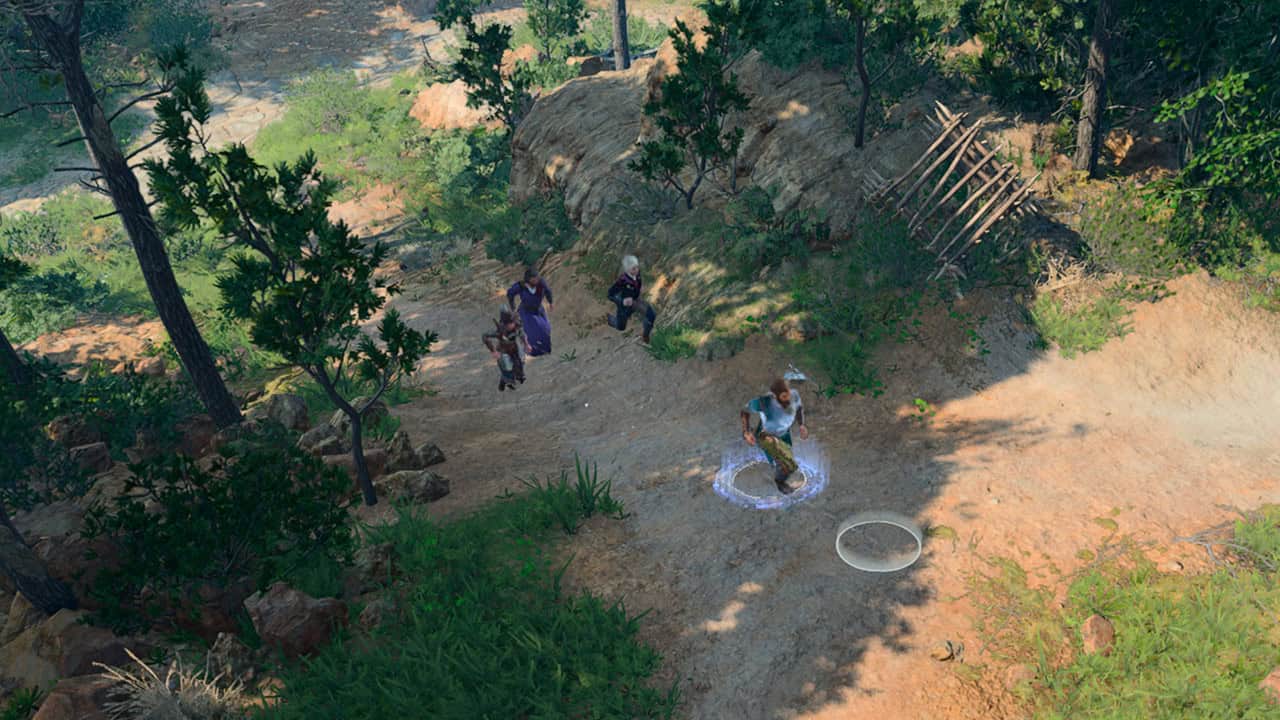
Baldur’s Gate III seeks to primarily evoke its tabletop origins tonally, I’d argue, reflecting the modern D&D play-group’s sessions, and mechanically, dutifully recreating the mechanics of D&D Fifth Edition as closely as makes sense for a computer game, much like its namesake. There’s a feeling of camaraderie and a focus on freedom in interaction, just as if you were playing with a real dungeon master. That tabletop atmosphere served to make the game very enticing to the larger-than-ever D&D market (see also the runaway success of media like Critical Role), therefore justifying a high budget and production values.
In contrast, the nostalgic tendencies of Japanese RPGs orbit Dragon Quest and, more popularly, the SNES Final Fantasy games, both of which are much less forward with tabletop remnants. Dragon Quest streamlined its RPG systems heavily, and in play feels almost like a scavenger hunt. Final Fantasy had started with some tabletop influences, like Vancian Magic (the style of magic system in D&D), but by the SNES era it was much more modern and cinematically-focused. There’s plenty of outliers along the genre’s development, but many of the most popular throwback Japanese RPGs skip the tabletop to look directly at Chrono Trigger and the like.
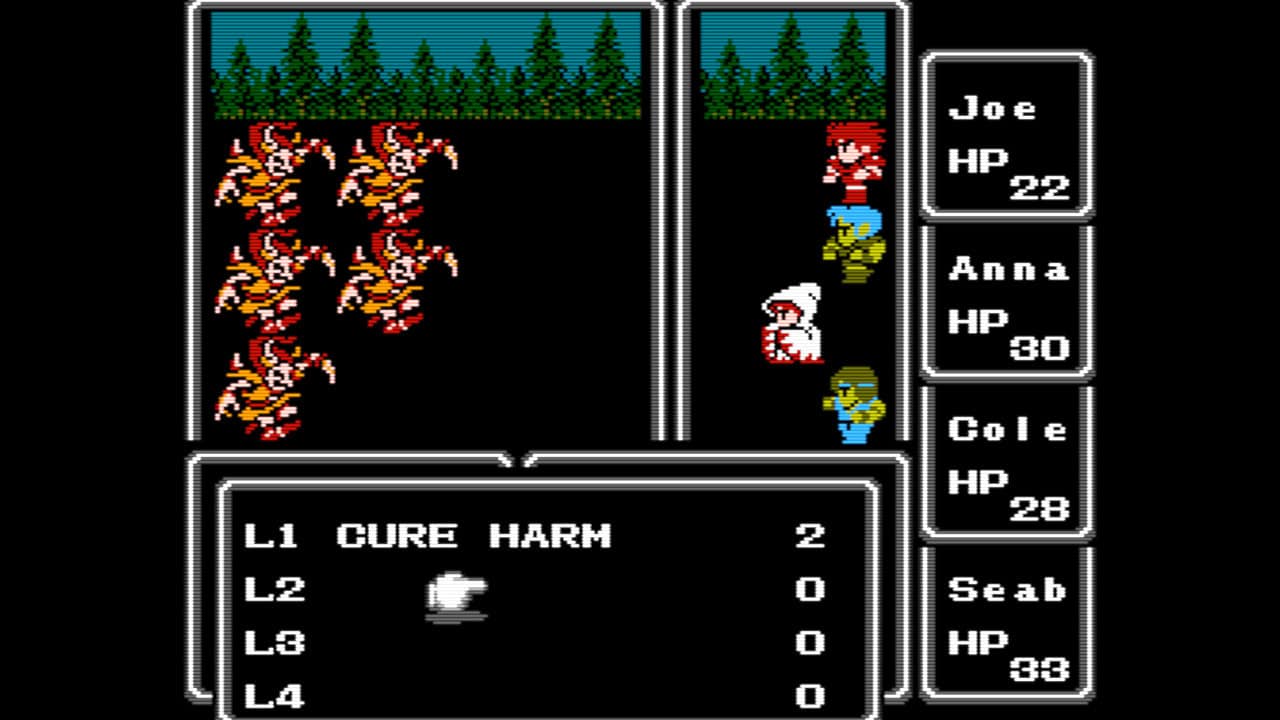
As for why Japanese RPGs tend to chart directly to Dragon Quest, my guess is that it’s to do with the infamous video game crash of 1983. This put the kibosh on the American home console market, and as such was one of many factors that pushed American developers towards the home computer instead, just as it was becoming popular. Meanwhile, in Japan, the home computer was popular, but when Dragon Quest became a runaway hit on the Famicom, it pushed the burgeoning RPG business in Japan towards the console market even while creating a template for those console RPGs to use.
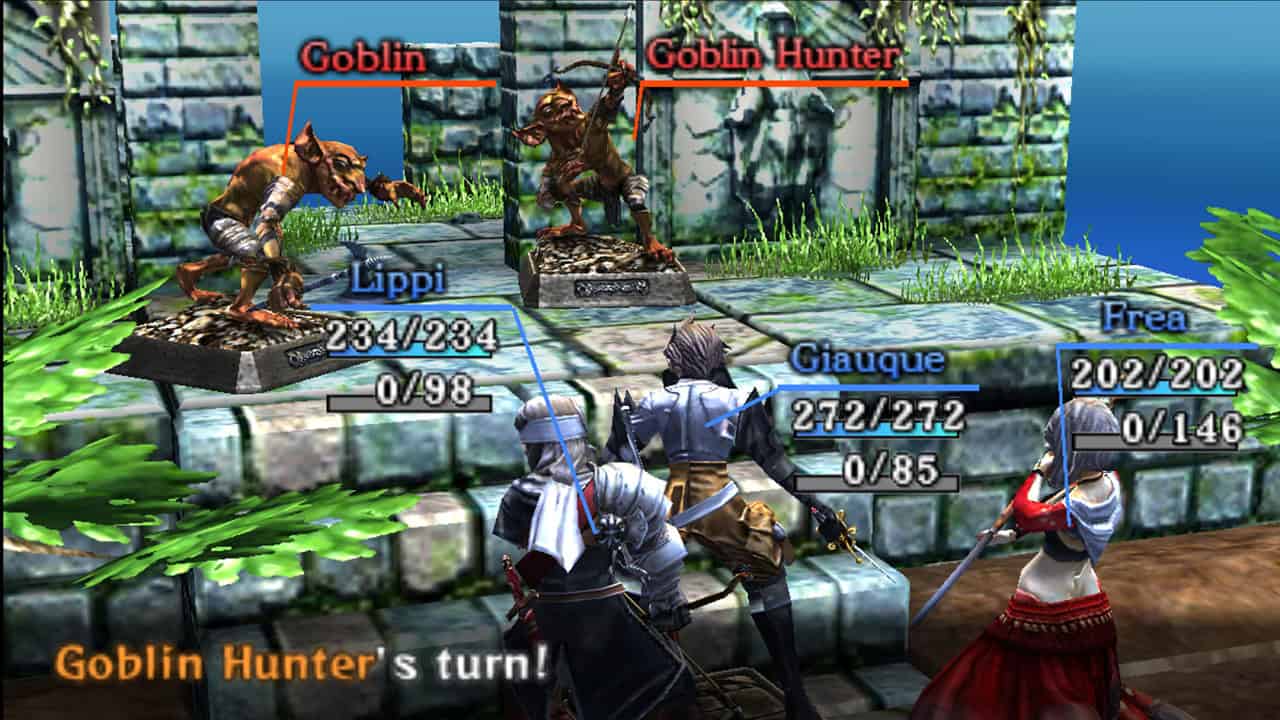
Crimson Shroud, the rare tabletop-throwback Japanese RPG, prefers to hang itself in the drapery of tabletop games for its throwback. Your characters are represented by static tabletop miniatures, you roll real-seeming dice (the dice roll chaotically over the table, as opposed to Baldur’s Gate III‘s more manicured animation) for incidental checks and combat bonuses, and you navigate around a hand-drawn map much like you’d find in a tabletop adventure book. Mechanically, though, it’s clearly pulling from typical Japanese RPG systems, even if it has a fun layer of thick uniqueness layered on top, and the story is most reminiscent of director Yasumi Matsuno’s earlier game Vagrant Story, though what’s here is plenty unique from that game.
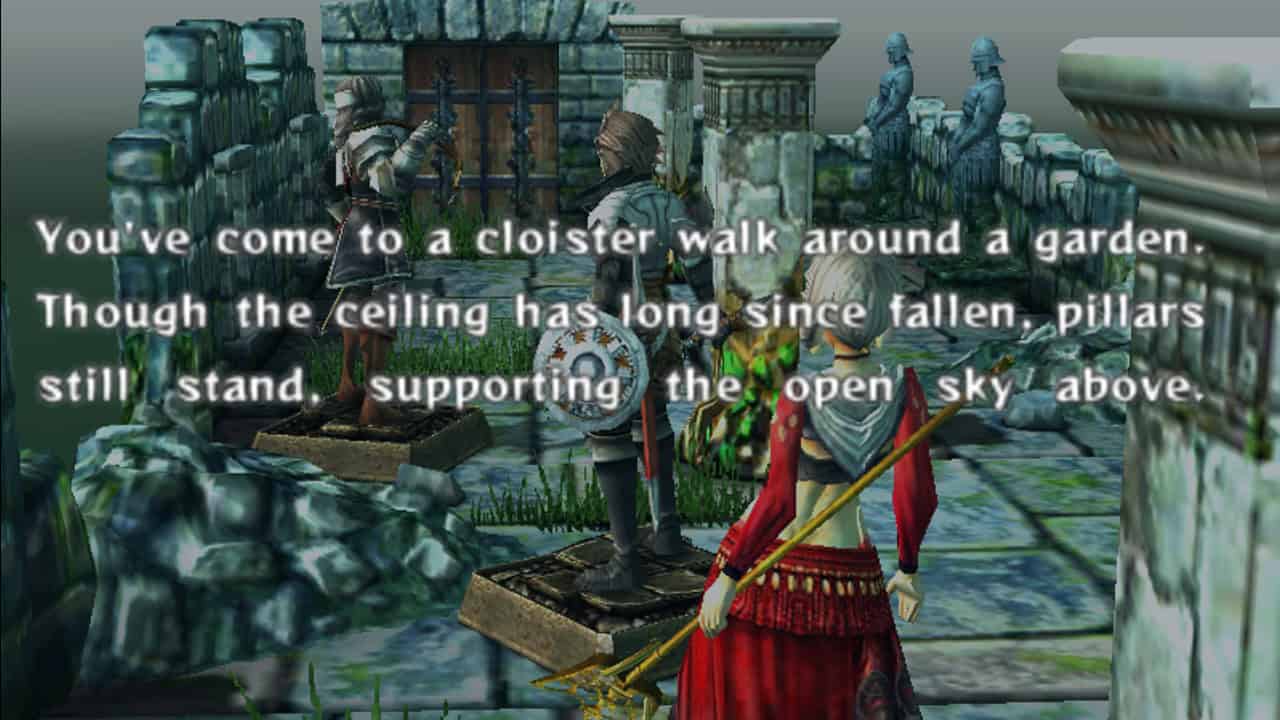
What’s interesting about comparing Crimson Shroud and Baldur’s Gate III, to me, is how the tabletop elements of Crimson Shroud are almost all in the presentation, because to still read as a Japanese RPG, even a dungeon crawler, you need systems more in line with the reference points of the genre. Western RPGs like Baldur’s Gate III need to do less work to evoke that same tabletop feeling, since they’re so mechanically aligned with tabletop games.
Personally, Crimson Shroud aligns much more with my tastes than Baldur’s Gate III. I’m a big Matsuno-head and a big dungeon crawler fan, so it’s just made for guys like me. Plus, that more surface-level throwback, along with the lower budget, allowed for more interesting mechanical decisions. The whole thing feels a bit scrappy, and it wasn’t any kind of great business success. Maybe that’s because it predates the 2010s tabletop gaming resurgence brought about by the release of D&D Fifth Edition. Baldur’s Gate III is more impressive, more open, and uniquely captured the culture, but didn’t give me any spark or show me anything really new. It feels burdened by its genre’s deep ties to tabletop traditions, in all the places where Crimson Shroud is free and exciting.
 ObserverCrew Picks
 bserver
 bserver