The SaGa series is an old one, almost as old as the ever-present Final Fantasy, yet to my knowledge it’s been either maligned or unknown in the West until somewhat recently. Part of that reputation may be that the series is the brainchild of Akitoshi Kawazu, a man most well known for Final Fantasy II (1988)’s controversial progression system. Regardless of the reason for it, Kawazu’s designs show a clear lack of influence from JRPG convention, whether intentional or not. He either took influence from Dungeons & Dragons itself, like with the spell system in the first Final Fantasy, or invented new systems seemingly whole-cloth just to see what they did. Final Fantasy II‘s progression is an example of the latter, as is progression in Makai Toushi Sa・Ga (which is a real trip; look into how getting stronger works in that game if you get a chance, it’s WILD). This kind of tabletop-influenced creative abandon is exactly what defines the SaGa series.
I can’t say the SaGa series has been vilified from personal experience, admittedly, but what I can say is I hadn’t heard of the series at all until COLLECTION of SaGa Final Fantasy LEGEND was released in 2020. What I’ve since heard from friends in the indie RPG community is that Kawazu was seen as some great ruiner of RPGs. Someone who only made impenetrable games that weren’t worth playing. That was my perception of Final Fantasy II until giving it a shot myself, and it’s still the opinion I see parroted online most often. Despite that negativity, in 2016 the series gained some ground in the English-speaking world. Ground enough to see the first new SaGa game in English in 11 years in SaGa: Scarlet Grace for the PlayStation Vita, as well as the first English release of Romancing SaGa 2, in its remaster the same year.
Since then, nearly every SaGa game has become available to play on every modern console via remaster or remake, with the exception of two: 2002’s Unlimited Saga, and 1992’s Romancing SaGa. Unlike Unlimited Saga, which nearly killed SaGa in the West in the first place, Romancing SaGa is a victim of having a comprehensive, well-received remake from 2005, Romancing SaGa: Minstrel Song. That’s what has been remastered instead. It’s a great remaster of a great remake, and fully worth checking out, but the original release of Romancing SaGa is a wildly interesting game in its own right. It’s a more digestible experience than the remake, and the only Romancing SaGa game with a completed English translation patch for the Super Famicom version.
It’s unfortunate, because Romancing SaGa is maybe the work most emblematic of the SaGa series. Its mechanics are just as often completely unique to this title as they are picked up and renovated for each successive game in the series! One of these systems, which would come to be called Battle or Event Rank in later titles, is the closest SaGa comes to having a series-defining mechanic. In most of these games, it’s purely a form of adaptive difficulty, swapping out or strengthening enemies based on how many battles you’ve fought; In this first Super Famicom game, it’s the engine that drives the world forward. As you fight battles, not only do you and your enemies get stronger, but recruitable characters move from city to city, quests become available or pass you by, and whole swaths of the world become embroiled in war, chaos, or just get wiped off the map. It’s intimidating, and I’m sure more than a bit of the series’ reputation comes from kids grinding a bit in a dungeon early on and coming out back into the world ready to demolish the rest of the game, only to find cities in turmoil and quest lines ended permanently.
Really though, it’s not so harsh. Plenty of quests open up as you fight battles, but only a handful become unavailable as you go. You most likely won’t lock yourself out of things you want to do, unless you try over-grinding or to see everything in the game in one playthrough. Go with the flow, fight a natural amount of enemies, and watch the world grow at a natural rate. What’s properly harsh is the final boss fight.
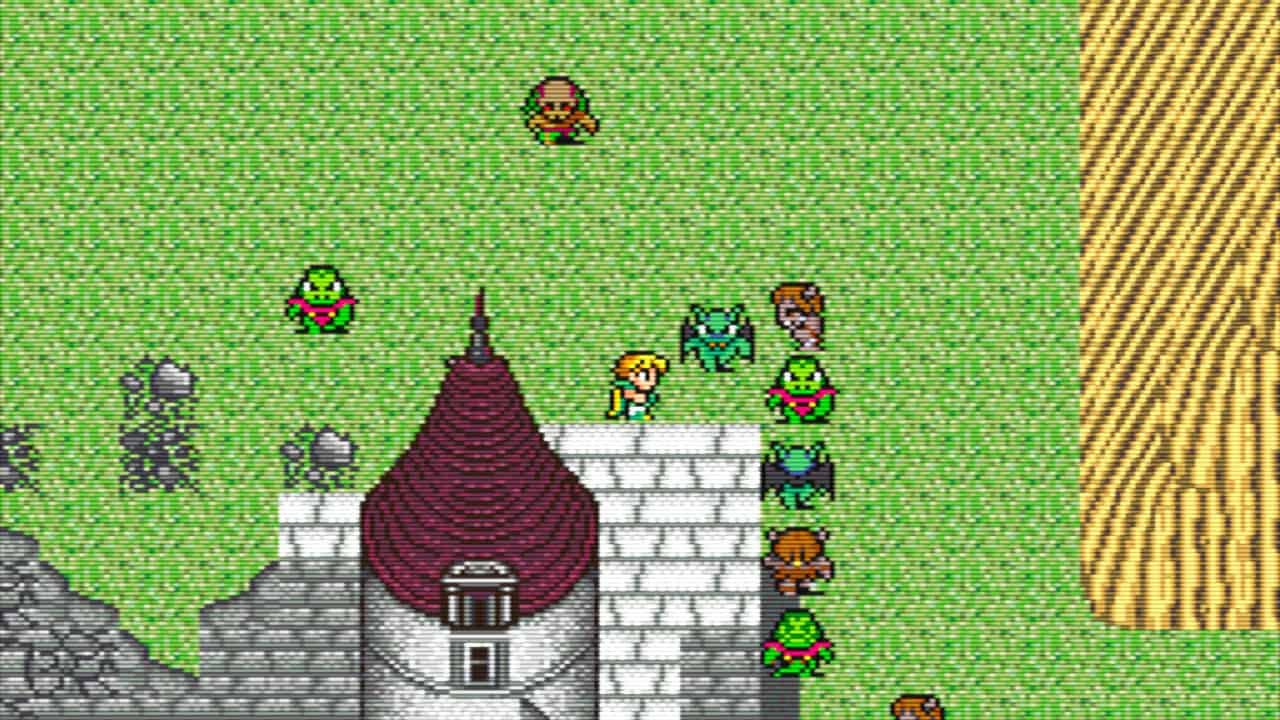
See, in a decision I believe to be tied to the implementation of the battle rank system, there are almost no required quests in a play through. Some characters have an intro quest that they need to do before going out into the world, but besides that, all you technically have to do is fight enough battles for the final boss fight to open up. I don’t recommend just grinding out 900 battles or whatever though, because he’s a real doozy, and that sounds boring as hell. Instead, exploring the world, its various nations and biomes and peoples, will put scenarios in front of you. If you like world-building done through side quests, this is your game.
Some of these scenarios link together into longer quest lines, most of them reward you with a boatload of gold (to afford the expensive high-powered equipment), and all of them tell you more about the context of the world. One night you’ll stay at an inn, be woken up by an assassin, and get spun into the ongoing war between criminal guilds in a country, only for it all to be tied into the larger narrative at the end. It’s all told a bit vaguely, you need to read between the lines a bit, but it’s all there, and the game’s paying attention to how you go about things. Act ruthlessly for your own gain, and you’ll find yourself fighting through the underworld preparing for the end. If you’re selfless instead, you’ll carry out rituals for the god of light and come out the other side with holy weapons. I doubt it’s the first morality system in a game, but it’s one of the earliest I can think of to be this fleshed out, all while not being as dualistic as later systems. There’s a whole neutral route as well, and each of these routes is an equally valid way to get to the endgame.
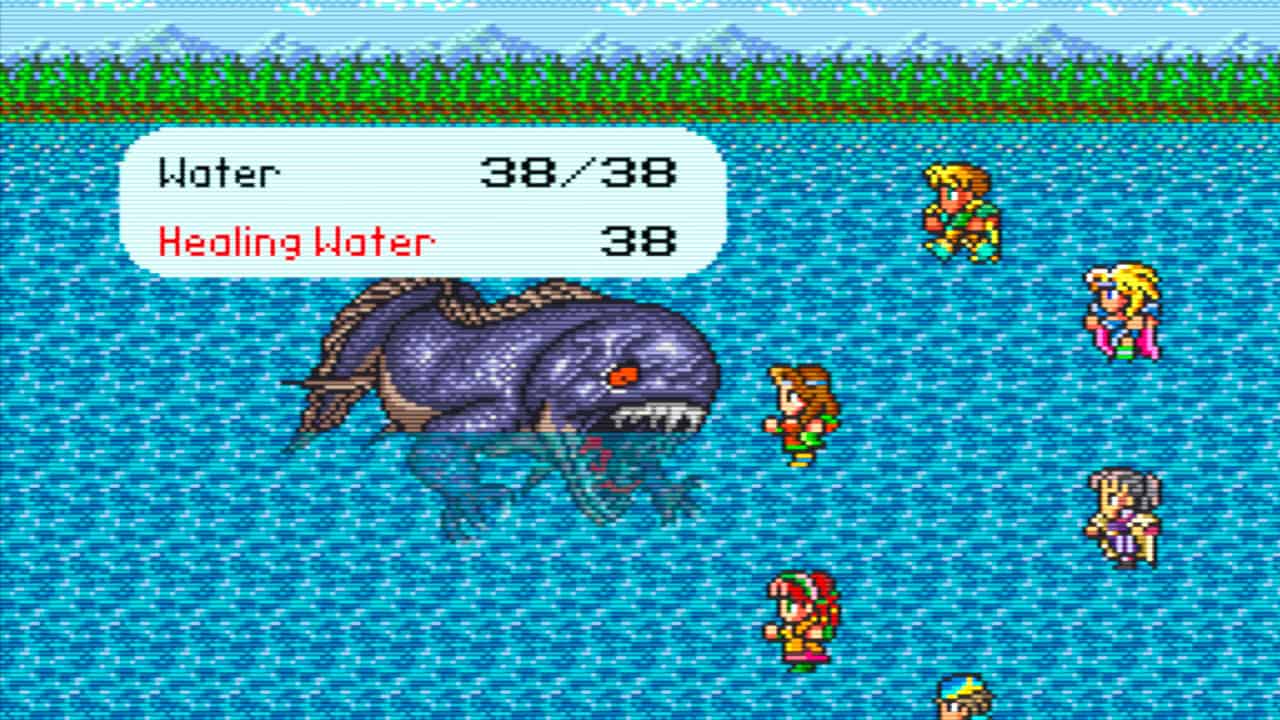
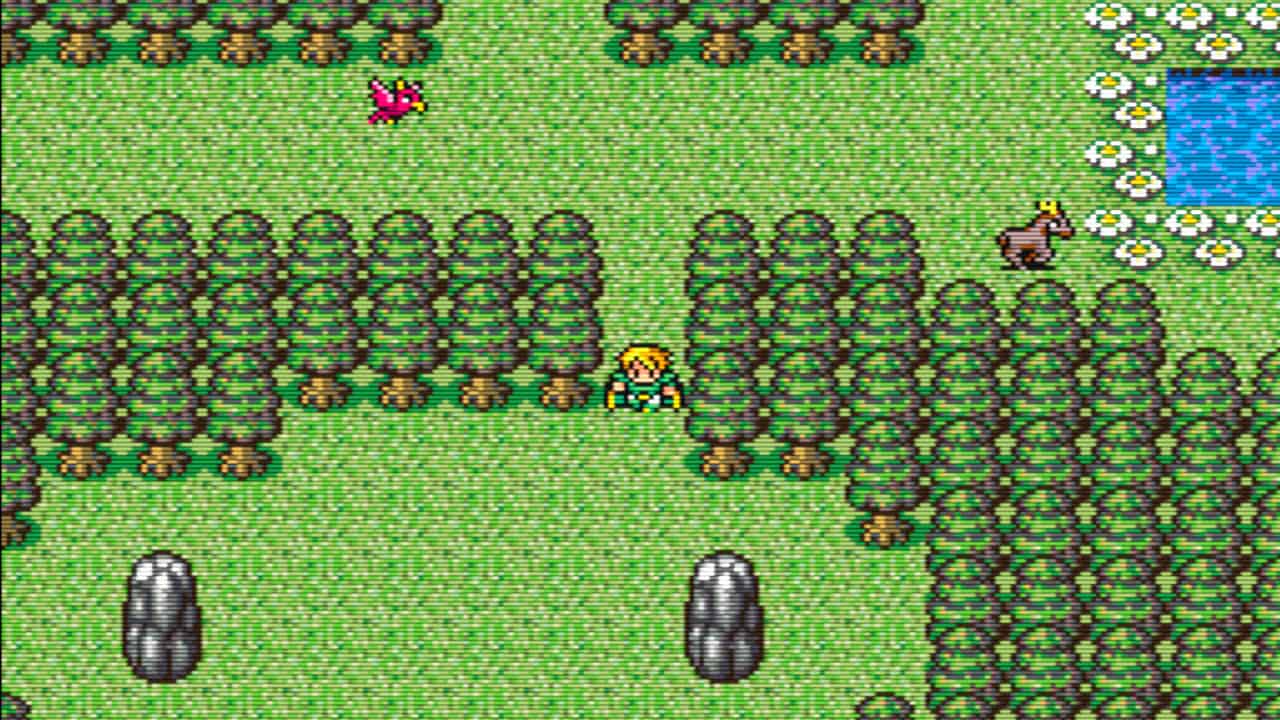
The most contentious part of the game among people who’ve actually played it has got to be the battle system. It’s the least fully realized aspect, and potentially the most annoying. Romancing SaGa is an early RPG to do away with random encounters, so all the enemies are on the map, and they respawn when you leave and re-enter an area. There’s loads on each map, so you’ll get used to dodging them when you want to, but if you screw up, you’ll end up in a bad position. Rather than your at-the-time typical front and back row system, Romancing SaGa has you place your six-person party on a three-by-three grid, and your formation changes depending on which direction you encounter an enemy from. It feels very cool, and pretty obviously influenced by early tabletop RPGs’ marching order mechanics, but you’ll often end up with characters in positions they can’t attack from. Different weapons have different ranges, and if your sword users wind up in the back row, they’ll either have to waste time moving to the front row, use magic, or just sit there defending. Better hope your bow and spear users can take care of things. In a game with fewer battles, this wouldn’t be such a big deal, but again you’ll need to fight around 900 battles to open up the final dungeon, and in that context it can get on your nerves, or at least it got on mine. Now that I’m fully used to the battle system, it doesn’t bother me so much; in fact I quite enjoy the hidden simplicity of the system, but the first time I tried the game it was a real turnoff. If that’s a no-go for you, don’t worry, no other SaGa games are this strict about this kind of formation mechanic, not even the remake of this game.
Like the still-disregarded Final Fantasy II, Romancing SaGa grows your characters based on how you use them. Not their base stats, though. Those grow at the end of each battle, semi-randomly based on that character’s growth charts, as if each battle has a chance to level you up based on how hard it is. Only weapon and magic skills require use to grow, but growing them can take quite some care. Weapons gain special attacks as you grow more skilled with them, whereas magic spells must be bought. It’s really not so complicated, but it’s a bit disorienting when you first hop in with how little the game tells you.
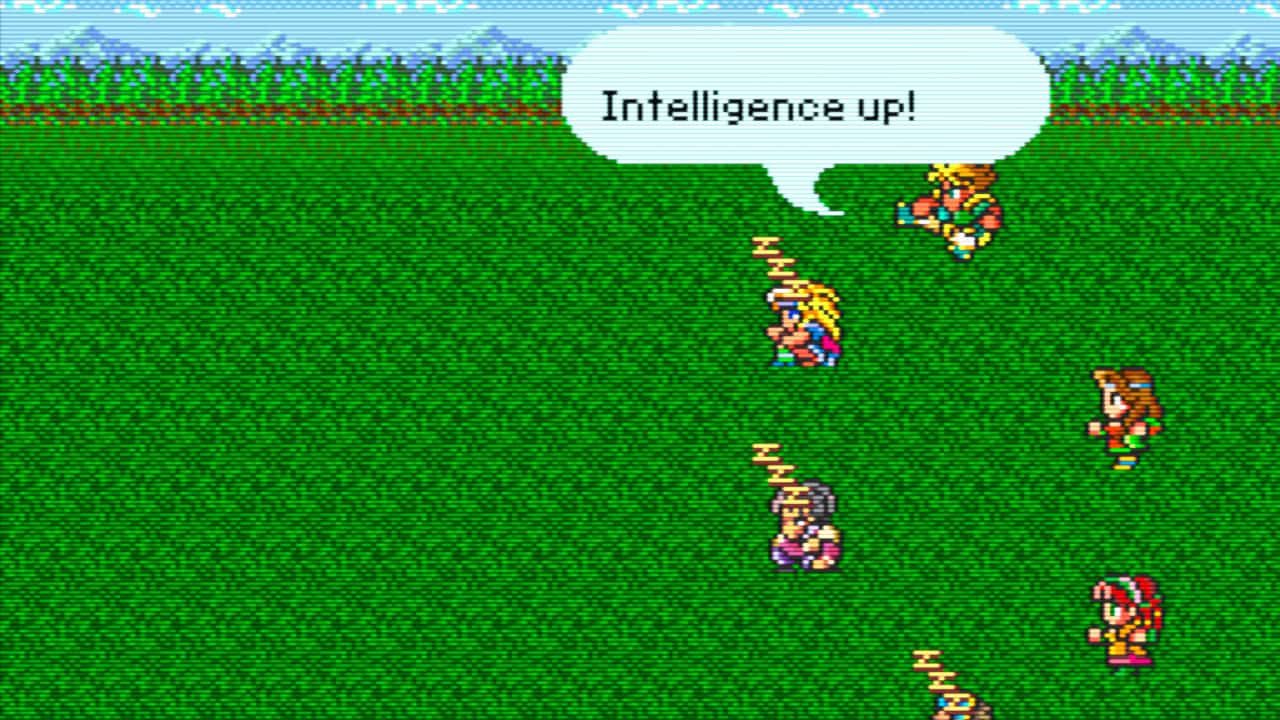
It’s here I’ll tell you there’s no shame in using a guide to help you along. I’d try to jump in on your own at first and figure things out as best as you can, and would never follow a guide word for word, but I happily used a guide to help me figure out things like the companion recruitment locations, which quests I wanted to seek out in particular, and what weapon types work best on which characters. No shame here. In fact, I believe part of the idea with this game was to create a bit of community, encourage people to ask other players for help. Unlimited SaGa leans very heavily on this idea, but it’s pretty clearly a through-line starting here.
All of these disparate mechanics do a wonderful job of giving Romancing SaGa a grounded atmosphere, of making its world feel real and truly alive. This living canvas that trends towards self-destruction provides a great space for a story about entropy and empire to be told, themes that would be doubled and tripled down on in the following Romancing SaGa games. Here you get this sense that not only does the world fall to pieces without your semi-divine intervention, but that the other inhabitants of the world are too focused on their petty political squabbles, on the enemies in front of them, to worry about the destruction coming from inside. That’s your job, by the way. To stop the god of destruction from returning, and stop his forces and ancient evils from working chaos in every inhabited land. All of this gets a bit more fleshed out in the remake, but here in Romancing SaGa there’s a feeling akin to some more cryptic fantasy books, books where reading between the lines and ruminating on your experience can lead you to your own ideas about what happened and why. There’s plenty of symbolism and implied in-universe politics to fuel any theories you have.
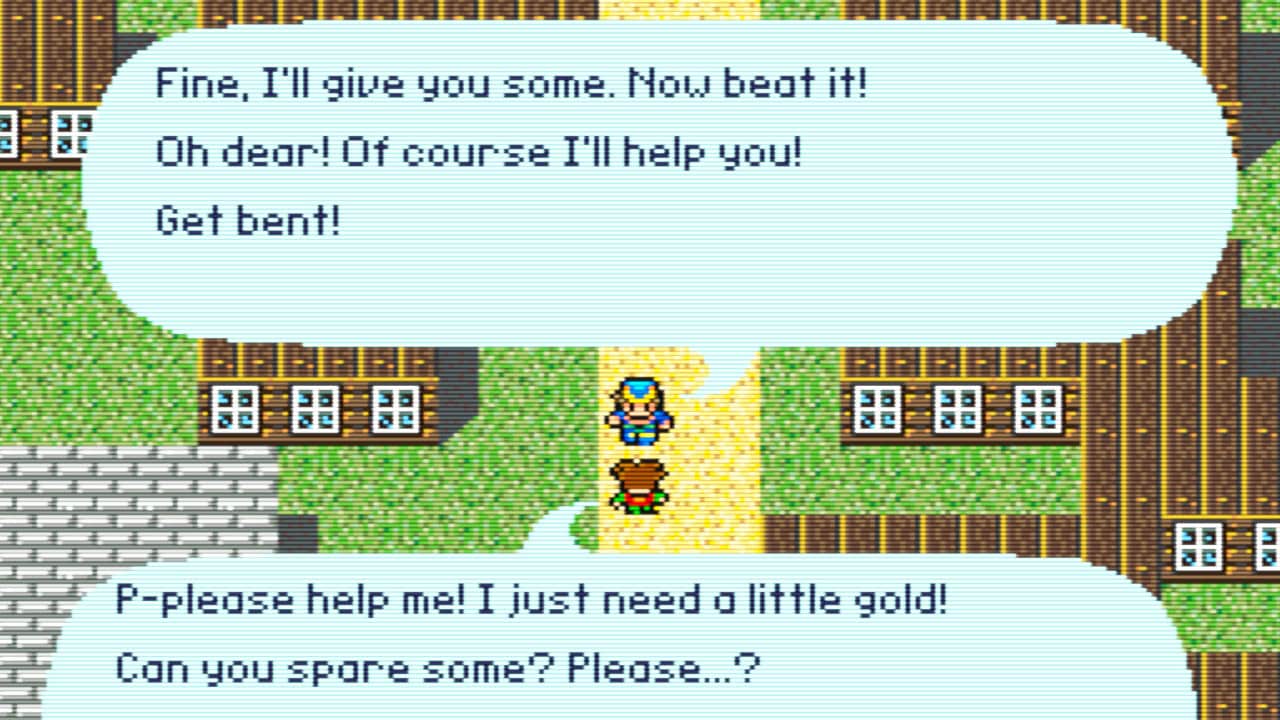
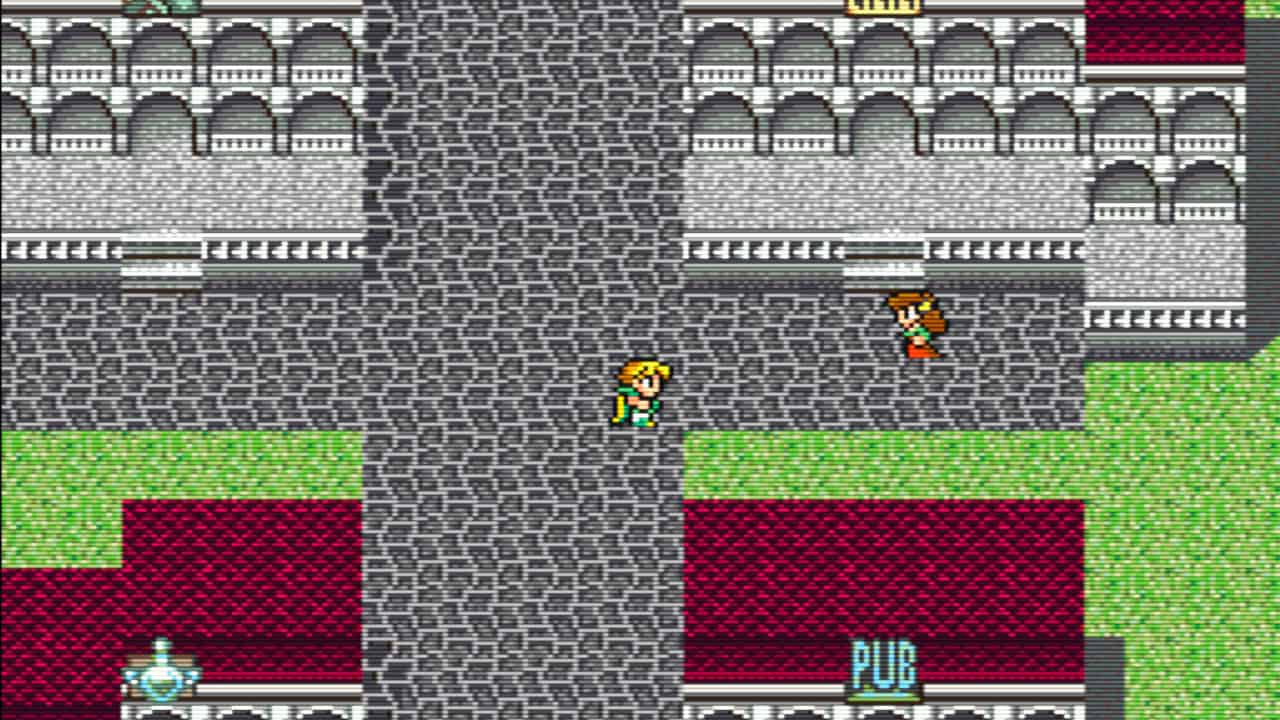
Here you can see the city of North Estamir is rich, compared to South Estamir, which is poor and filled with beggars, due to South Estamir having recently been conquered by a rival nation. The game world is largely composed of these kinds of political details.
It’s a real shame Romancing SaGa is the most ignored entry of a forgotten series, because the game is just bursting with ideas. Other SaGa games may be more polished or more fleshed out, but there’s something about this one, something that feels alive. It bears the marks of creation still, and I find that exhilarating. What I’m trying to say is, you should give Romancing SaGa for the Super Famicom a proper try. Don’t just boot it up and get discouraged. Choose a character that looks cool to you and just explore around a bit. Don’t get too tied to your play-through, just look at what surrounds you. Take a fun little jaunt, maybe read up a bit on the mechanics, and begin again in earnest. Start with either Albert or Claudia this time if you want the most story-heavy introductions, and still don’t stress too much about doing everything or fighting too much. It’s good fun, and maybe it’ll even get you to think about challenging art differently.
But mostly it’s just good fun.
 ObserverCrew Picks
 bserver
 bserver