Pokémon Mystery Dungeon: Explorers of Sky is one of those games that periodically makes the rounds on the social media nostalgia circuit. It was more popular than it feels, a massive cult classic, and just a great game with pretty varied appeal. It’s got raw dungeon crawling for the sickos, heavy story focus for the narrative-heads, some giant number of Pokémon for just about everyone, and offers enough of a challenge to keep interest without ever becoming prohibitive. But did you know the Mystery Dungeon series goes back to 1993? And, much like the mainline Pokémon games, is heavily rooted in Dragon Quest?
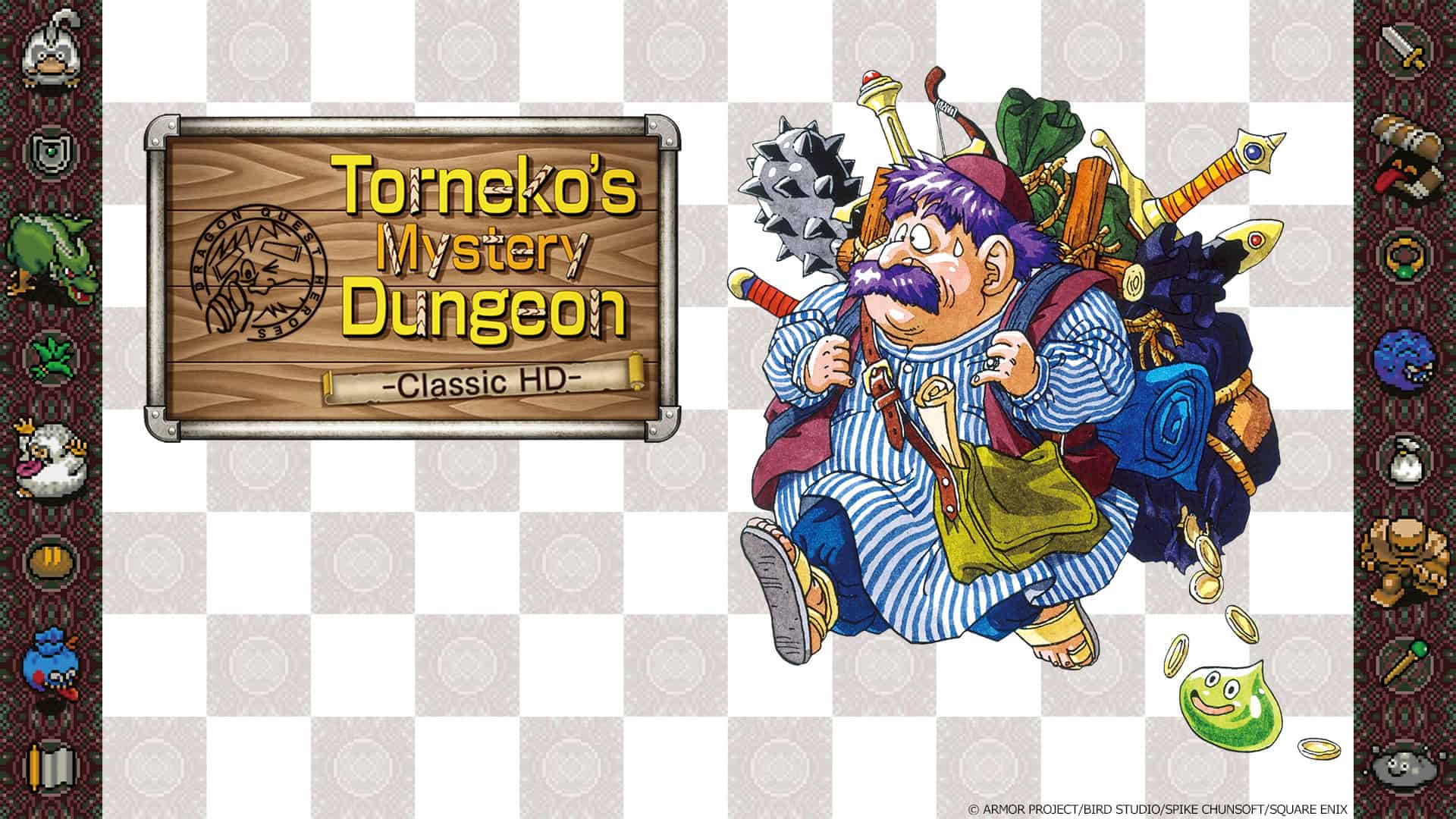
Torneko no Daibōken Fushigi no Dungeon, known in English as Torneko’s Great Adventure: Mystery Dungeon, recently remade for modern platforms as Dragon Quest Heroes: Torneko’s Mystery Dungeon -Classic HD-, is the first in the storied Mystery Dungeon series. Helmed by Dragon Quest co-creator Koichi Nakamura, Torneko’s Great Adventure is a traditional roguelike dungeon crawler for the Super Nintendo, where you play as one of the supporting protagonists of Dragon Quest IV, the shopkeeper Torneko, as he delves into a “mysterious dungeon” (whose layout changes every run, of course) in search of treasure to grow his shop.
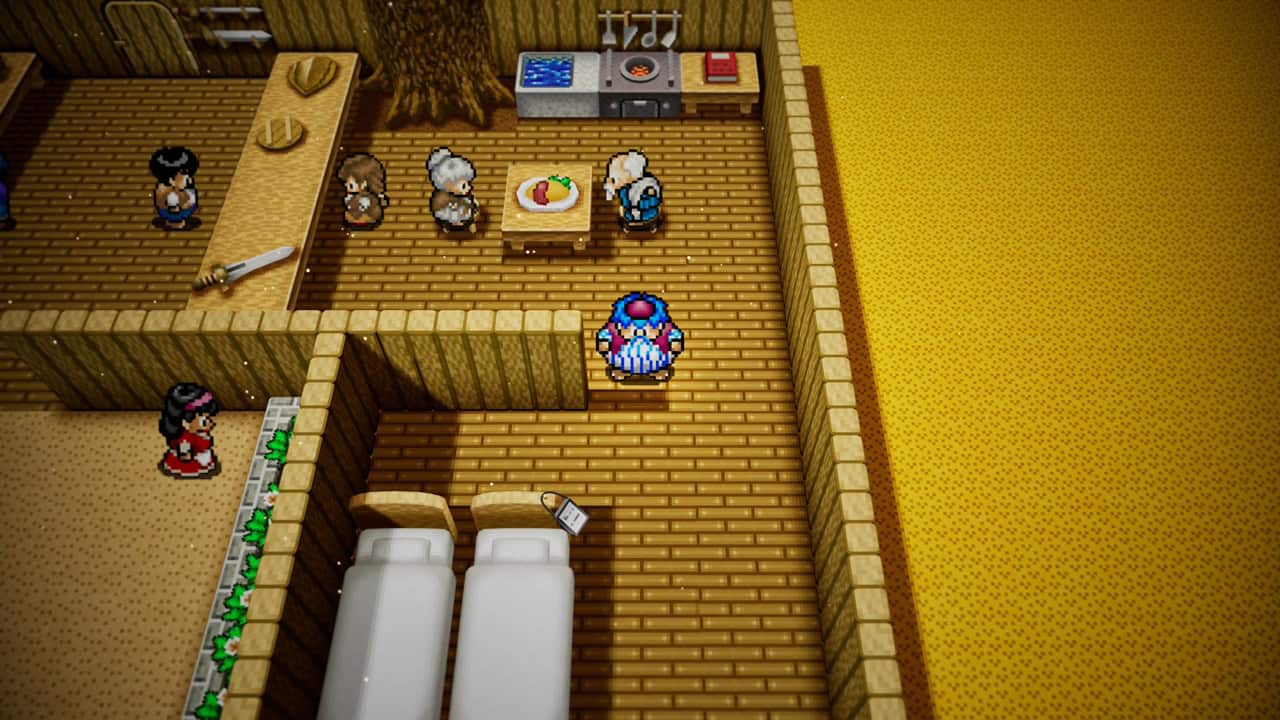
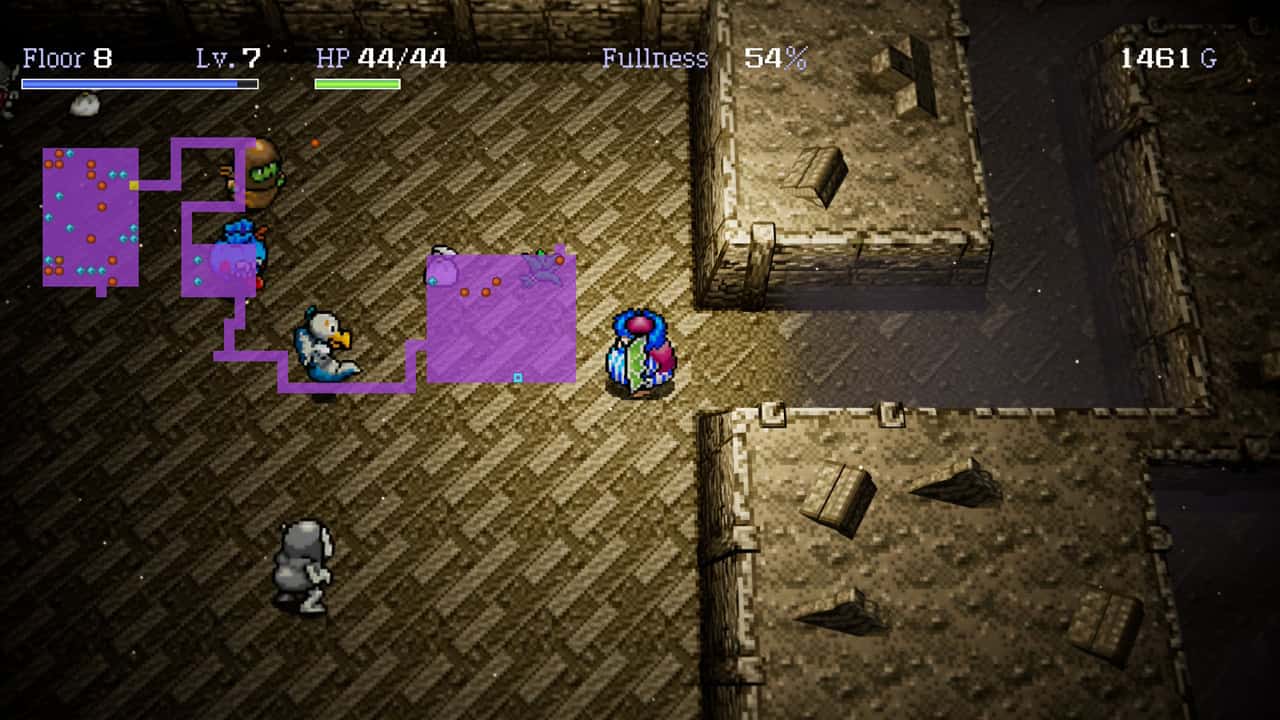
There’s not much more to it than that. The dungeon has around 30 floors, each composed of a randomly generated 3×5 grid of rooms and hallways. You pick up items, defeat enemies, and descend floors until you either die or manage to escape. If you’ve played any other Mystery Dungeon games, or any classic roguelikes (like Nethack, Caves of Qud, or Rogue itself), it should feel like coming home. There’s a macguffin close to the end of the dungeon (called the Mystery Box in fan translations, or the Chest of Cheer in the remake) that you must retrieve to beat the game, similar to many classic roguelikes.
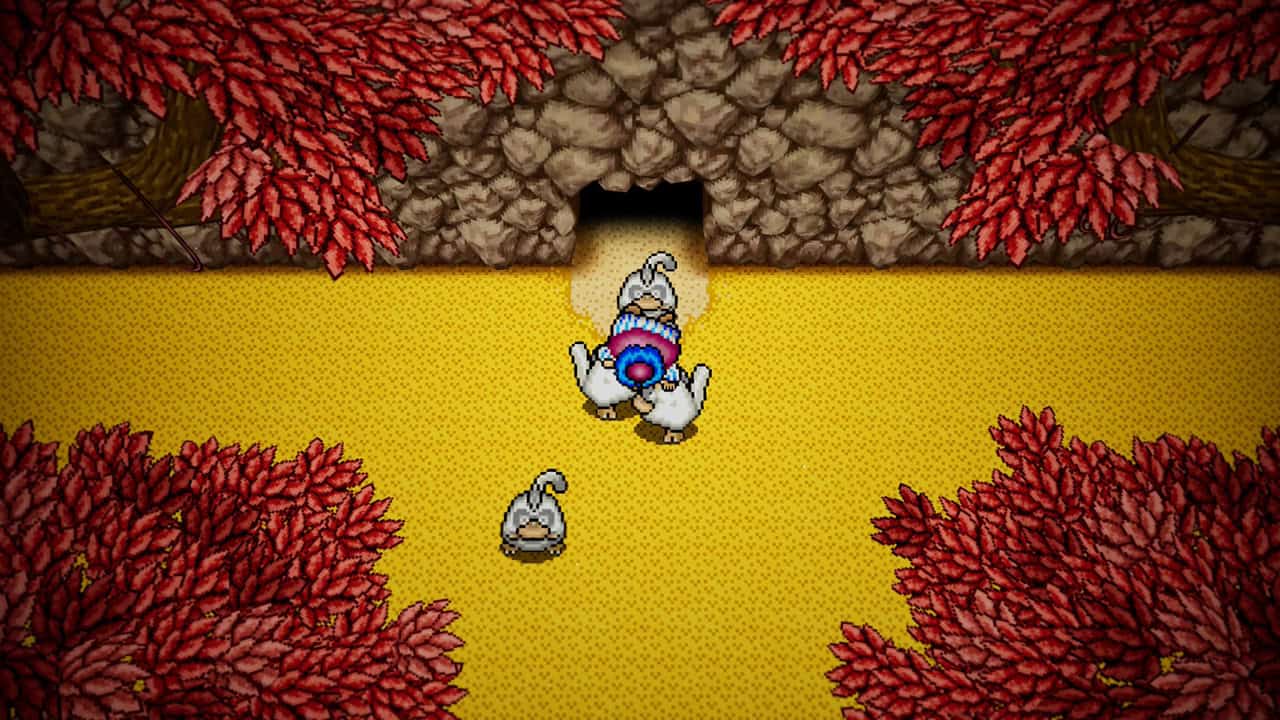
Torneko’s Great Adventure: Mystery Dungeon doesn’t share Pokémon Mystery Dungeon‘s mild challenge level. It’s a bit mean and rather tricky. Sure, it starts how you’d expect, just bashing enemies with your best weapon, but as early as the tutorial dungeon you’re likely to get murdered by an enemy that puts you to sleep on a loop if you attack without thinking, and once you’re in the main dungeon, you’ll be wishing for the times when those early enemies felt hard. There’s enemies that duplicate when you hit them, enemies that can confuse you from anywhere in the room, enemies that DRAIN YOUR LEVEL, and, in the deepest parts of the dungeon, enemies that are just too tough to realistically fight. It’s a game that punishes you for acting without thinking.
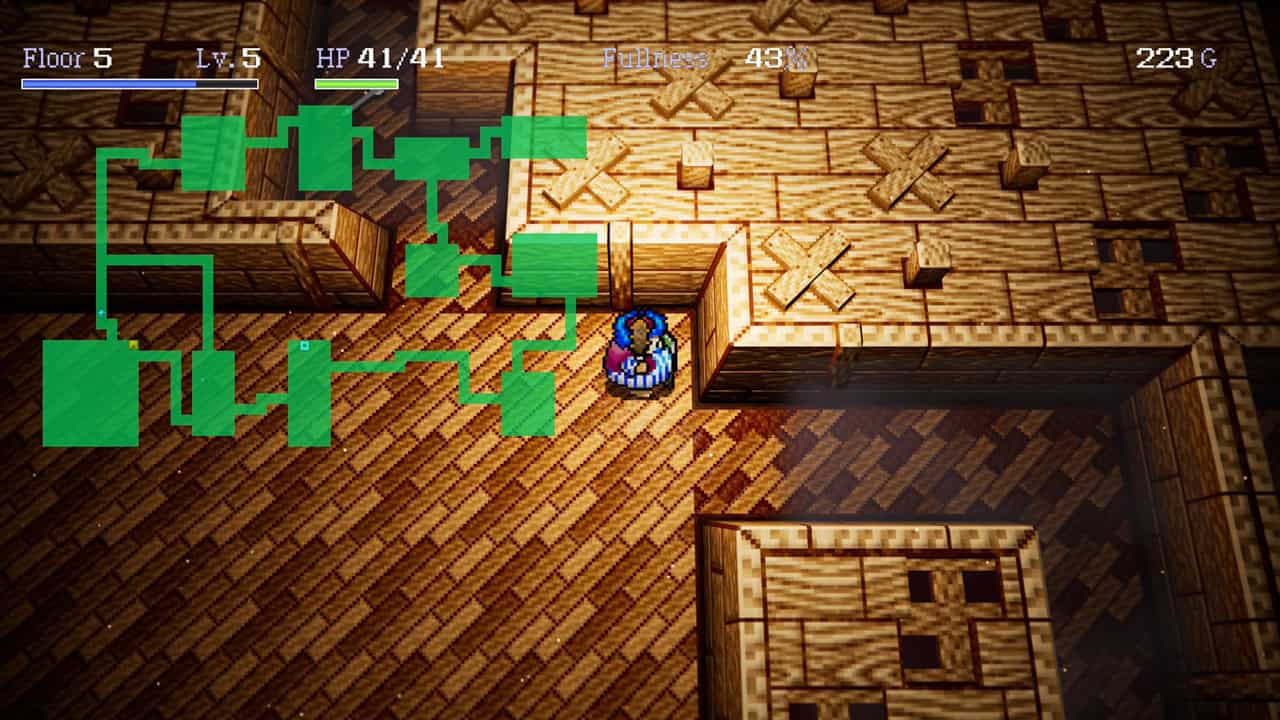
That punishment is plenty harsh too. As I said, it’s a traditional roguelike, so when you die, you have to restart the dungeon. Made one bad move? Sorry, you’ve got 20 dungeon floors before you’re back where you were, you’re level one again, and you’d better hope you don’t do anything stupid on the way. You have to keep your eyes peeled and your options open.
Honestly though, it’s less punishing than most traditional roguelikes. You may even call it the first “roguelite”. You can bring a couple of items into the dungeon each run to make the first bit of your run less painful. You see, whenever you escape, you bring your items and money with you, and even in the case of dying, you at least keep half of the money you had on you.
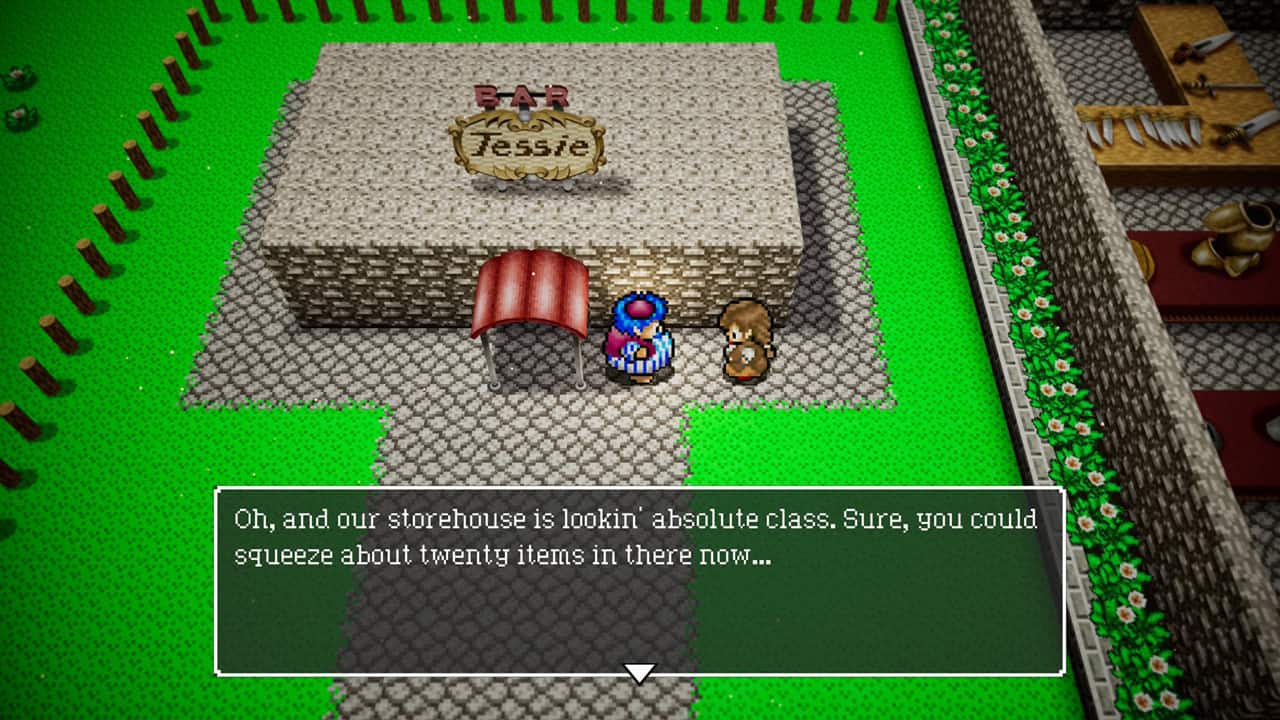
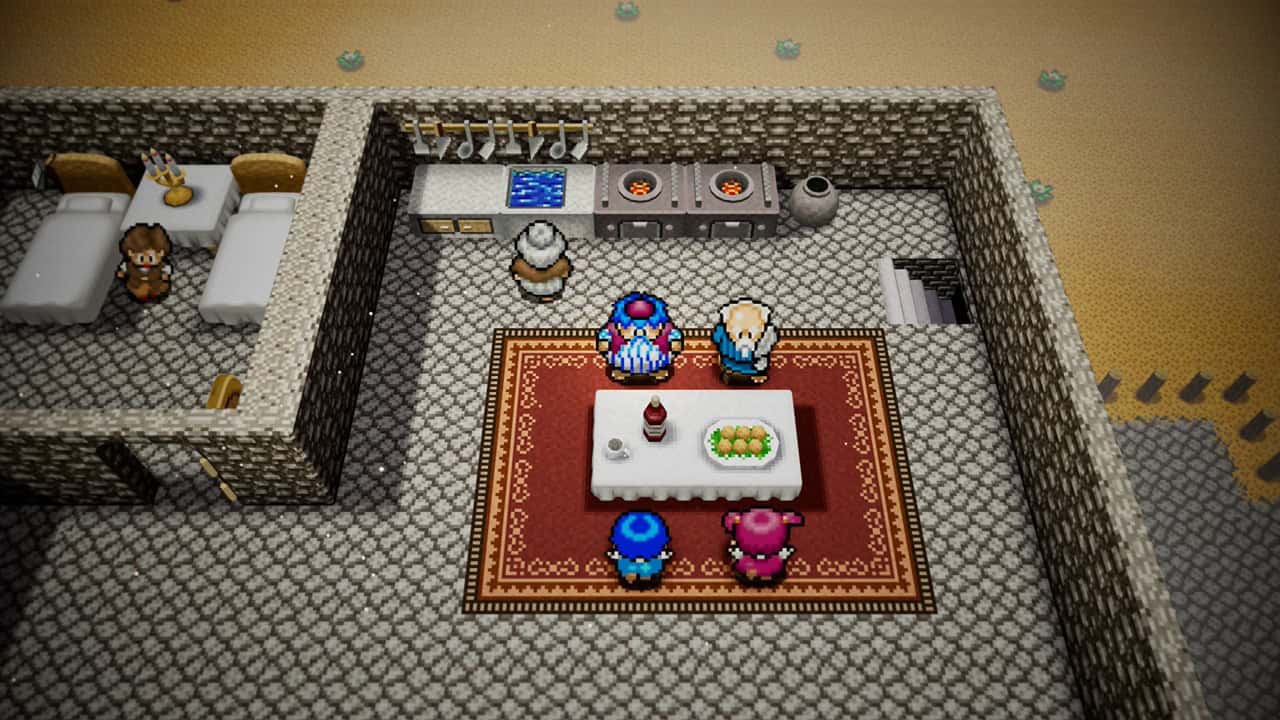
As you bring treasure out of the dungeon, your shop grows. You become a pillar of the local community, to the point that the King, Chancellor, and Prince all separately hang out at your shop in disguise. In classic Dragon Quest fashion, the weirdo side characters that populate the world are just as enjoyable as the actual gameplay. It’s so cute to get to know these characters, like the knight who’s always been one floor deeper than you (until he hasn’t!), or the 100-year-old Juan and his 130-year-old father, who give you hints about the dungeon, and even your warm and supportive family, who run the shop while you’re off spelunking.
This greatly enhances the sense of progress, even when you’re just repeatedly dying, such that you never feel like you’re just spinning your wheels. You’ll always pull out with some gold, and, if you keep your wits about you, you could even bring some equipment and enjoy a hugely overpowered sword for the next run!
All that said, I never left the dungeon without dying. Never brought anything into the dungeon beyond a loaf of bread, and certainly never rolled credits. I love traditional roguelikes; I find them inspiring and particularly enjoyable on a tactile level, but I’ve never beaten a single one (to my knowledge). I don’t know if I just can’t be asked to be on my toes for so long, or if that simplicity of interaction I like is also a barrier to getting my brain into gear for them, but Torneko is no exception. After a good 10 or 20 runs down to ~level 25, including one where I grabbed the Chest of Cheer and made it back up a few floors before getting cornered, I had to call it for my own sake.
Like a lot of early Dragon Quest games, Torneko is deceptively hard, and uses a very simple framework to build a dungeon that’s significantly more varied in types of challenge than almost any other dungeon crawler I’ve played. It’s a big fan of contorting its rules just shy of breaking them, something that feels definitively old-school about it, especially when compared to later contemporaries in the roguelike and roguelite space.
I hope this remake isn’t some last gasp of the Mystery Dungeon series. In the last ten years, only one original game in the series has been released, the latest Shiren the Wanderer game, and that dearth feels like such a missed opportunity. At a time when traditional roguelikes are too dorky, too overwhelming to breach the culture, Mystery Dungeon still has a foothold with people around my age (late 20s to early 30s), and a big new Pokémon Mystery Dungeon with more of a roguelike emphasis than usual would have a real chance in the current market.
Maybe they’re just too historically-minded. Only one traditionally-styled roguelike comes to mind as a success story in recent times, Caves of Qud, and it didn’t really do it by breaching the space The Binding of Isaac built. The most popular Mystery Dungeon games moved away from high difficulty, creative dungeon crawling, and into more of a “normal JRPG with Rogue-shaped dungeons” structure. Most people’s memories of Mystery Dungeon are not drawing comparisons to The Binding of Isaac and Slay the Spire, but to classic JRPG dungeon crawlers. That’s a sweet spot for me, and a space for all RPG sickos, as well kids who don’t know they’re larval RPG sickos. I hope I’m wrong, and that Spike Chunsoft can figure out a way to sell Mystery Dungeon to the roguelite deckbuilder crowd, but I’m not holding my breath.
For what it is, though, Dragon Quest Heroes: Torneko’s Mystery Dungeon-Classic HD- is pretty good. It’s Rogue for the console gamer, just like it was 30 years ago, and the remaster is incredibly faithful. It’s heartening to see an official English release, and hopefully, at the very least, we get some good Mystery Dungeon remasters in the next few years. That’s why I bought it, even if I could’ve guessed it would remain in my library, unfinished.
 ObserverCrew Picks
 bserver
 bserver