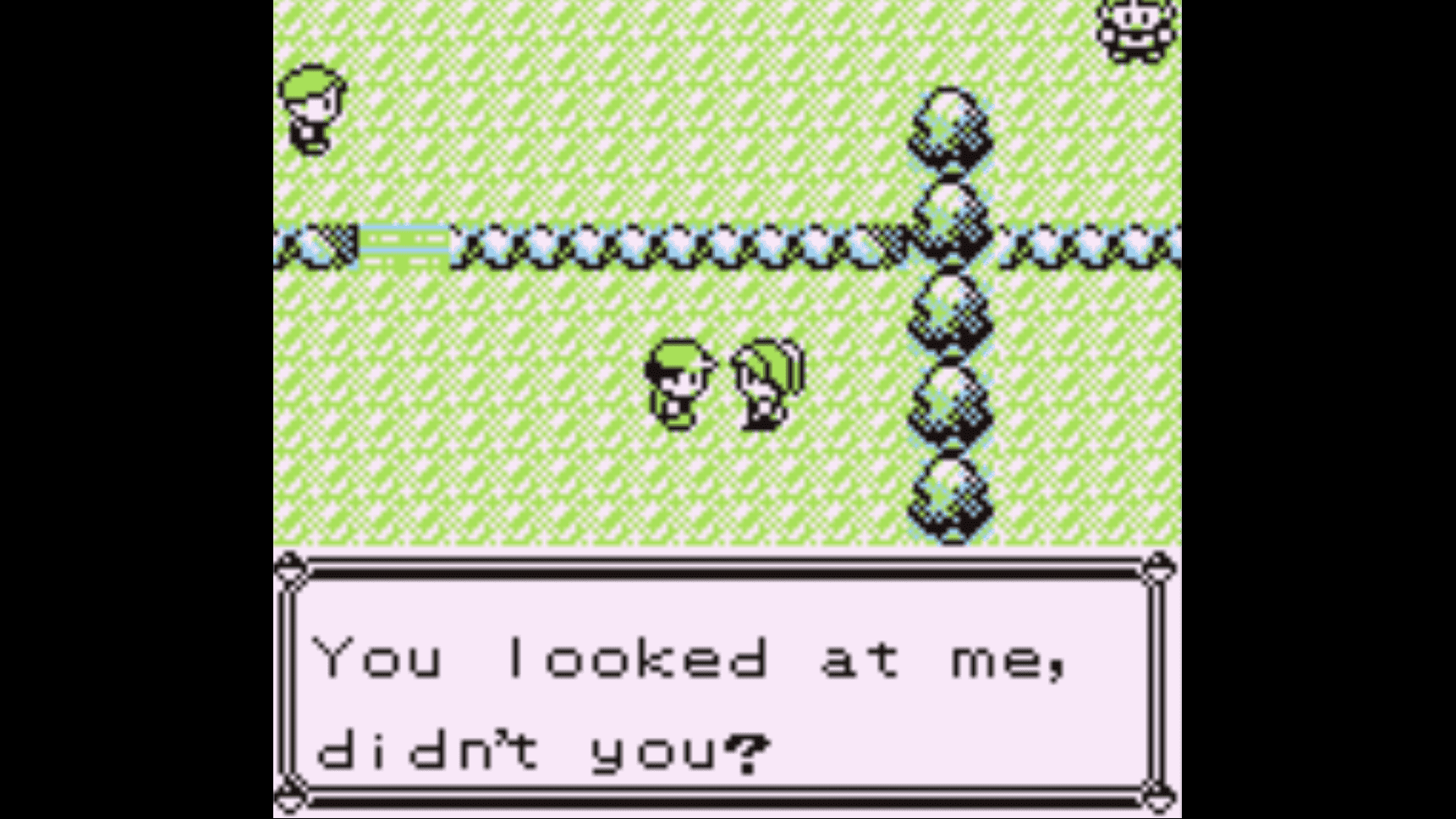
It’s easy to dismiss Pokémon Red and Blue as ‘having aged poorly.’ And, to an extent, coming back to the original Game Boy from the Switch, many of the quality-of-life features present in later generations are sorely missed. It’s certainly annoying to have to deal with the item limit, for example — I could not tell you how many times I had to figure out what to discard since you’re going to get more TMs and key items than you’re ever going to have free space in your bag. It’s certainly rather finicky to go to the menu and manually select which HM move you want to use, and really tedious having to use the PC every time the game suddenly decrees you need to use Cut. Pokémon learn either every move or no move, which makes raising certain mons such as Nidoran or Beedrill feel like pulling teeth. But at the same time, this disparity makes the game’s difficulty fold a bit too easily in the hands of an experienced player: everybody clowns on Gen One Ghost-types for having zero effect on the type it’s explicitly meant to be a counter to, but at the same time, they effectively stomp over the rest of the game because so many Pokemon only ever (naturally) learn normal type moves.
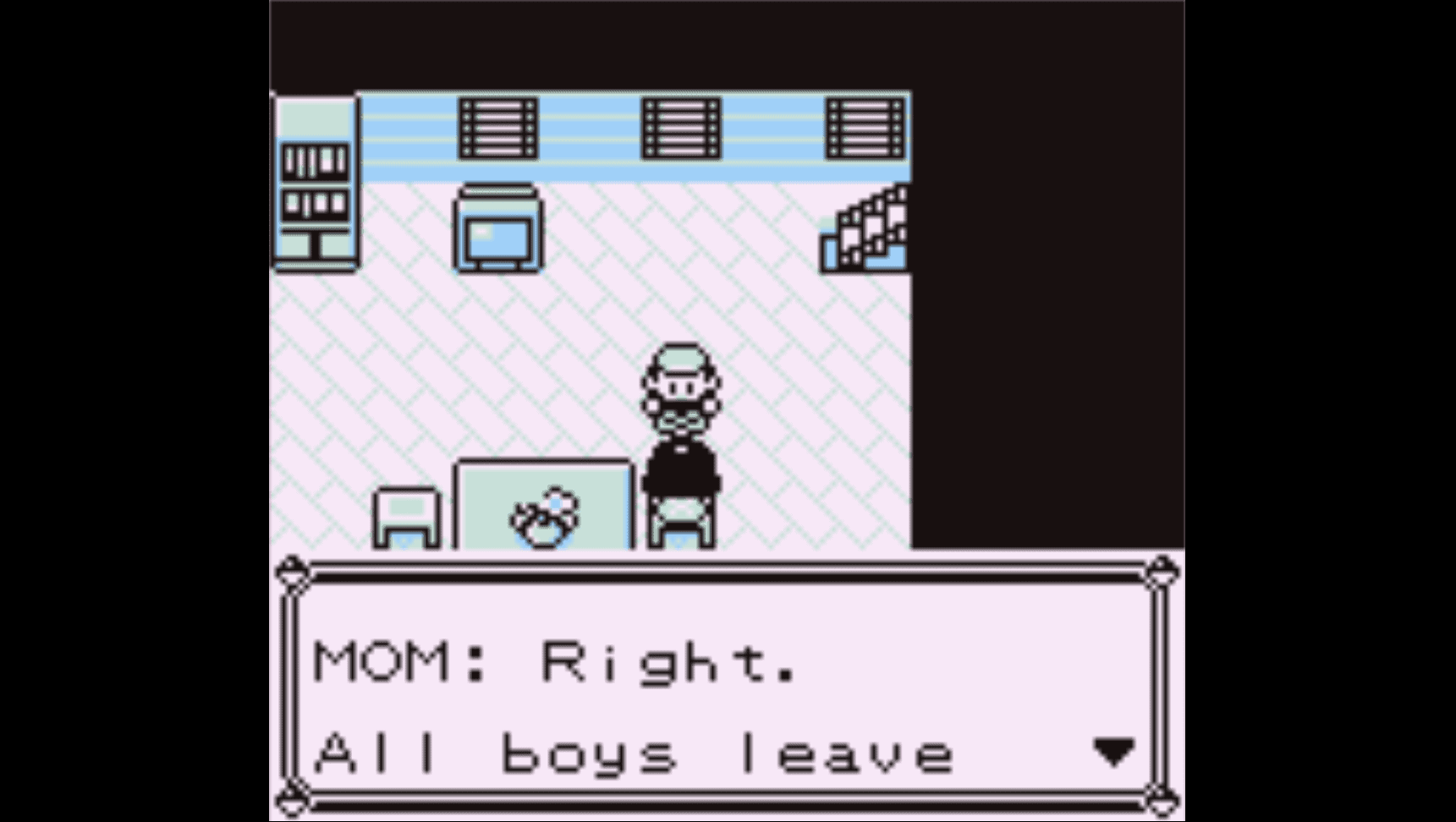
But at the same time, the key words in that point are ‘in the hands of an experienced player.’ I can’t imagine little Jimmy, age six is going to know that trainer movepools consist of haphazardly selected moves out of what each Pokèmon naturally learns. It would be easy to say that the first generation of Pokèmon (Gen One) folds to any player who knows what they’re doing, but that’s with all the foreknowledge and wiki-walks 30 years have given us at this point. A common critique is that Gen One is glitchy, ‘held together by duct tape and dreams’ — a statement I myself parroted rather uncritically — but you do truly have to know what you’re doing if you want to break the game. The so-called “good” AI — a stratagem applied to important fights, meant to push them towards super effective moves and away from not very effective moves — is anything but, making it oh so easy to trap said important fights in a loop because this paradigm fails to take into account whether said super-effective move does damage.
Yet even then, the number of fights I couldn’t cheese with this method outnumbered the ones I could, and even then to abuse it you have to also know which advantages are prioritized over others, lest your Nidoking get Aurora Beamed when you were trying to bait Dewgong into using Rest. Sometimes when you rewatch the catching tutorial and then go to Cinnabar Island you rip the game open, a malignant piece of code emerging from the shoreline, irreversibly corrupting the world around you, before then challenging you to a Pokèmon battle. But, like, who’s doing that? Focus Energy and Swift don’t work like they should, but, like those are two moves out of 165 (and in Swift’s case, it’s a bit persnickety to be going after a ‘100% accuracy move’ for only having 99.6% accuracy). By and large, you will go through the entire game just fine. We see much worse performing games today! Game Freak did not spend months post-release fixing all the bugs and softlocks for you to call their game unplayable! Play something released before 2015 for once!
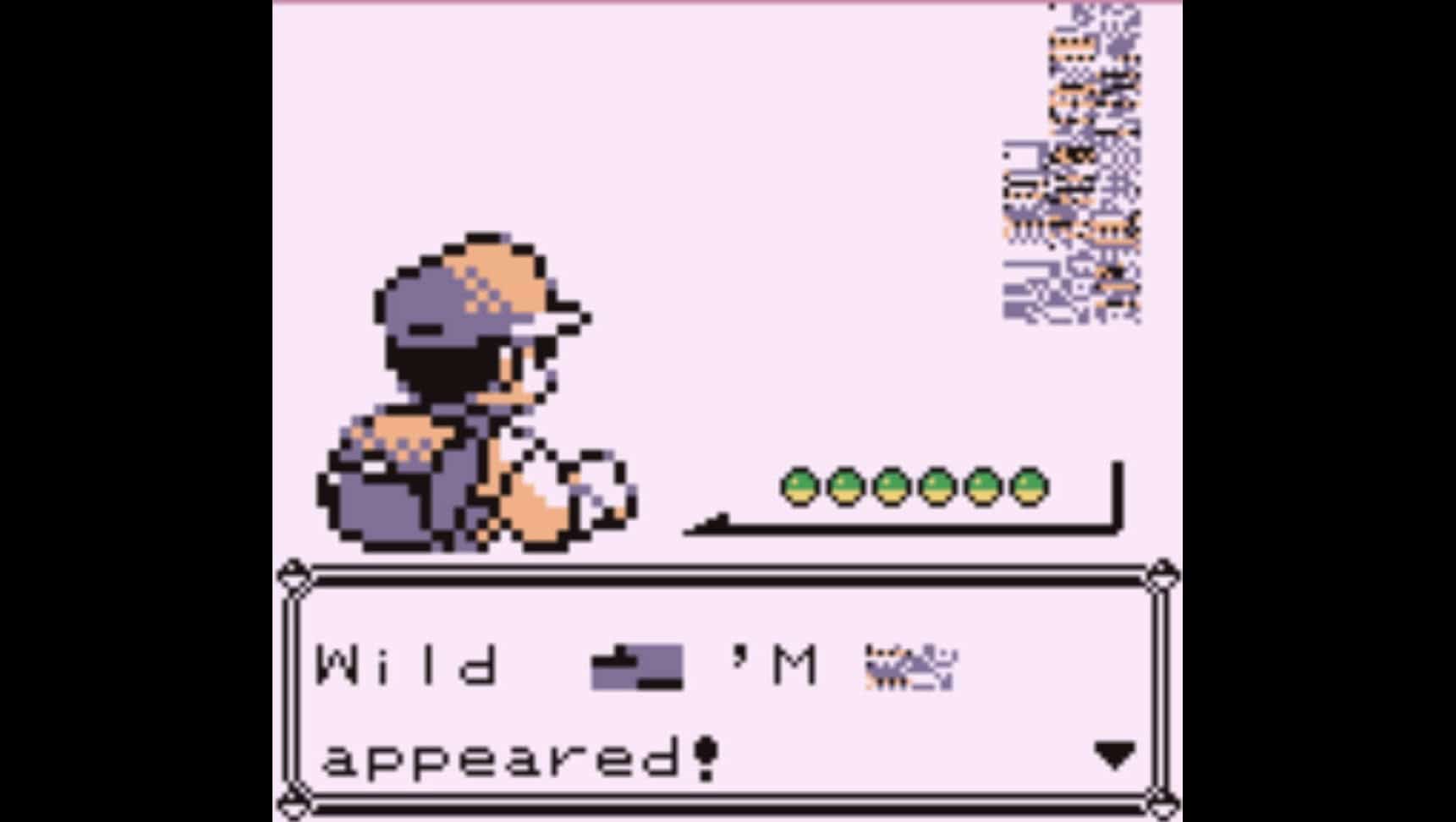
It’d be easy to say that Pokèmon Red and Blue are nowadays seen more as a stepping stone for the series than as a standalone experience. I’ve often heard people just say you should play the remakes instead. And admittedly, in fairness, I probably also lean that way. While certainly important to understand just what the appeal was and how the franchise took over the world, in the full context of what we have now, they don’t really come off as the best Pokèmon games to actually play.
But that’s the thing: Pokèmon Red and Blue did not set out to be Pokèmon games, they set out to be RPGs. An RPG with a central mechanic that completely reimagines how said RPG gameplay traditionally works, yes, but an RPG nonetheless, and one that hews much closer mechanically and thematically to being one than any Pokèmon game afterward.
I’d be easy to say the game folds to any player who knows what they’re doing. On the other hand, that’s coming from a world where you’ve gone through Kanto in so many other games. That’s with the years worth of accumulated knowledge of the type chart — or the years spent playing games that’ll just tell you if a given move will be super-effective the moment the opposing Pokèmon is registered. Pokèmon Red and Blue, on the other hand, run under the impression that they’re the only games of their kind. Specifically, they kind of run under the old RPG paradigm where finding the way forward often required you to take in context clues, or often explore simply for exploration’s sake. Kanto is huge, and after a certain point, notably open-ended: moving forward only requires whatever you need to move forward, be that a key item, an HM, or the permission to use said HM. Once you beat Misty, the game becomes one huge scavenger hunt, where you’re unlocking something that’ll unlock something that’ll unlock the way forward, and oftentimes, that whole process starts with you hearing what a random NPC has to say, or with you just picking a direction and walking towards the horizon, hoping there’s maybe something at the end of the next route.
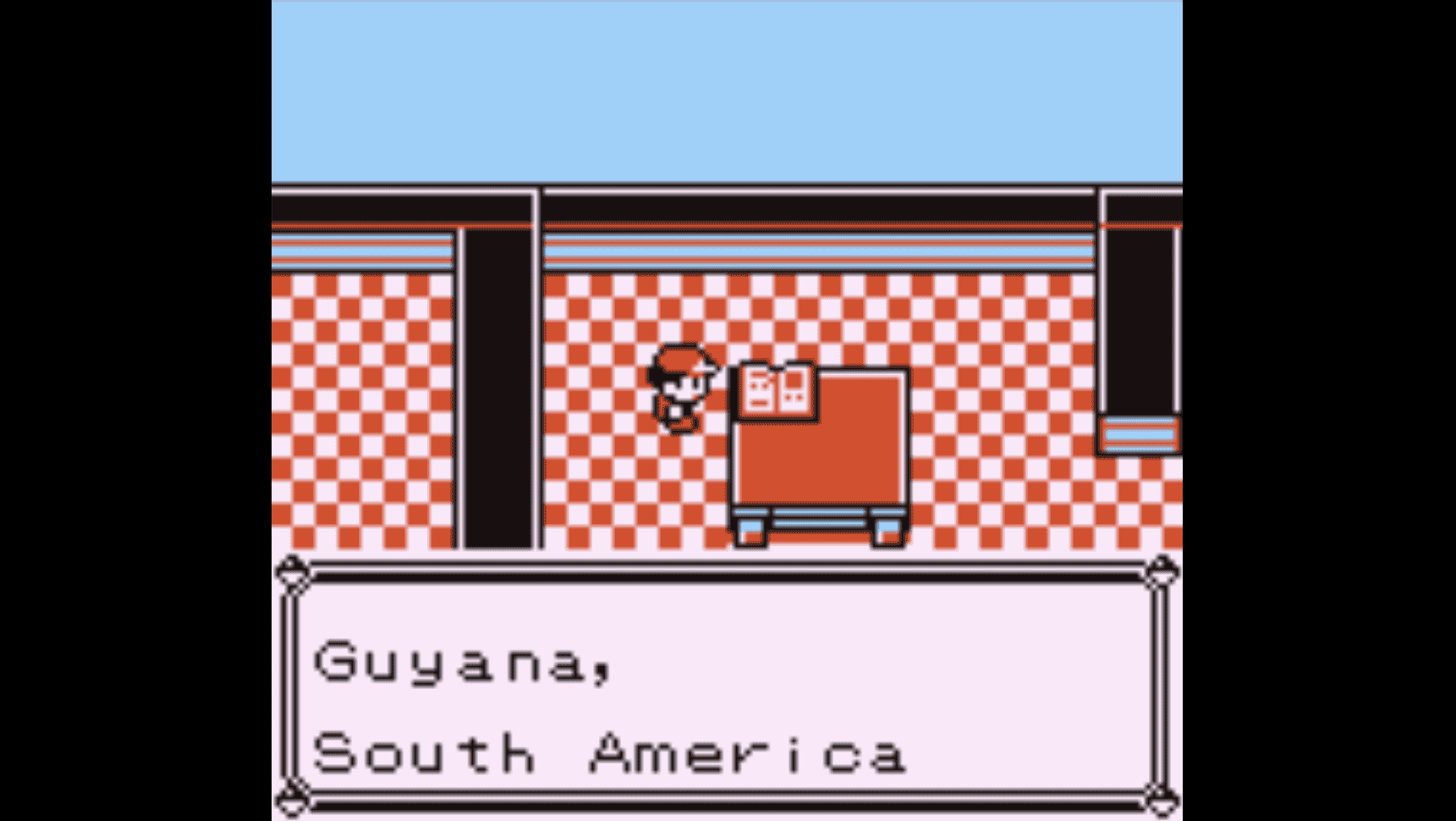
This approach isn’t limited to merely what governs progress, either. The type chart, and the way certain Pokèmon evolve, while you can certainly find all this out in-game via brute force, exploring the region and listening to what people have to say tells you so much of what you might like to know. From the gym guide giving you the lowdown on what to expect as you go up to face your next challenge, from the guy in the Celadon Department Store who gets traded a Graveller and is shocked to see it evolve, to the random trainer on the seaside who informs you how Nidorino evolves via Moon Stone, you learn so much from the people you meet along the way, and you never know just who is going to give you the exact info you might happen to want. I love how indirect this can be, too: for example, how the positioning of the Fighting Dojo relative to Saffron City’s gym tells you about how Fighting types are weak to Psychic, or Diglett’s cave giving you the exact tools you need to beat the gym right next to it. If I got to have all my memories taken of a certain thing, a chance to go through the whole game blind once again… I’m not sure Pokèmon Red would actually be the pick, but man, is it up there. I love how, theoretically, the road to progress is marked by exploration, through interaction, through solving the giant fetch-quest that makes up the Kanto region. It’d be awesome to see how that all works in practice.
And, side tangent here, I happened to play Dragon Warrior II for the NES earlier this year, and I was shocked to see just how much Pokèmon was inspired from it. People complain about how Gen One sleep just sorta locks the victim in a loop they can’t get out of, but, as I was unlucky enough to find out, that’s a mechanic straight up lifted from here! The whole ‘know where to go and also learn important game mechanics by talking to random NPCs’ method of progression? Also from here! I presumed it was more that Pokèmon took inspiration from Dragon Quest in general (because who on Earth would take inspiration from II, of all Dragon Quests?) but then I found out no, literally. Dragon Warrior II was literally the big inspiration. Like, scratch what I said above, the whole reason trading exists as a feature was in part because Ken Sugimori had multiple of a rare drop Satoshi Tajiri desperately wanted on his own copy. I was just genuinely so shocked when I found that out. Enough so that I had to put down something about it here. I guess going through Dragon Warrior II was good for something after all…
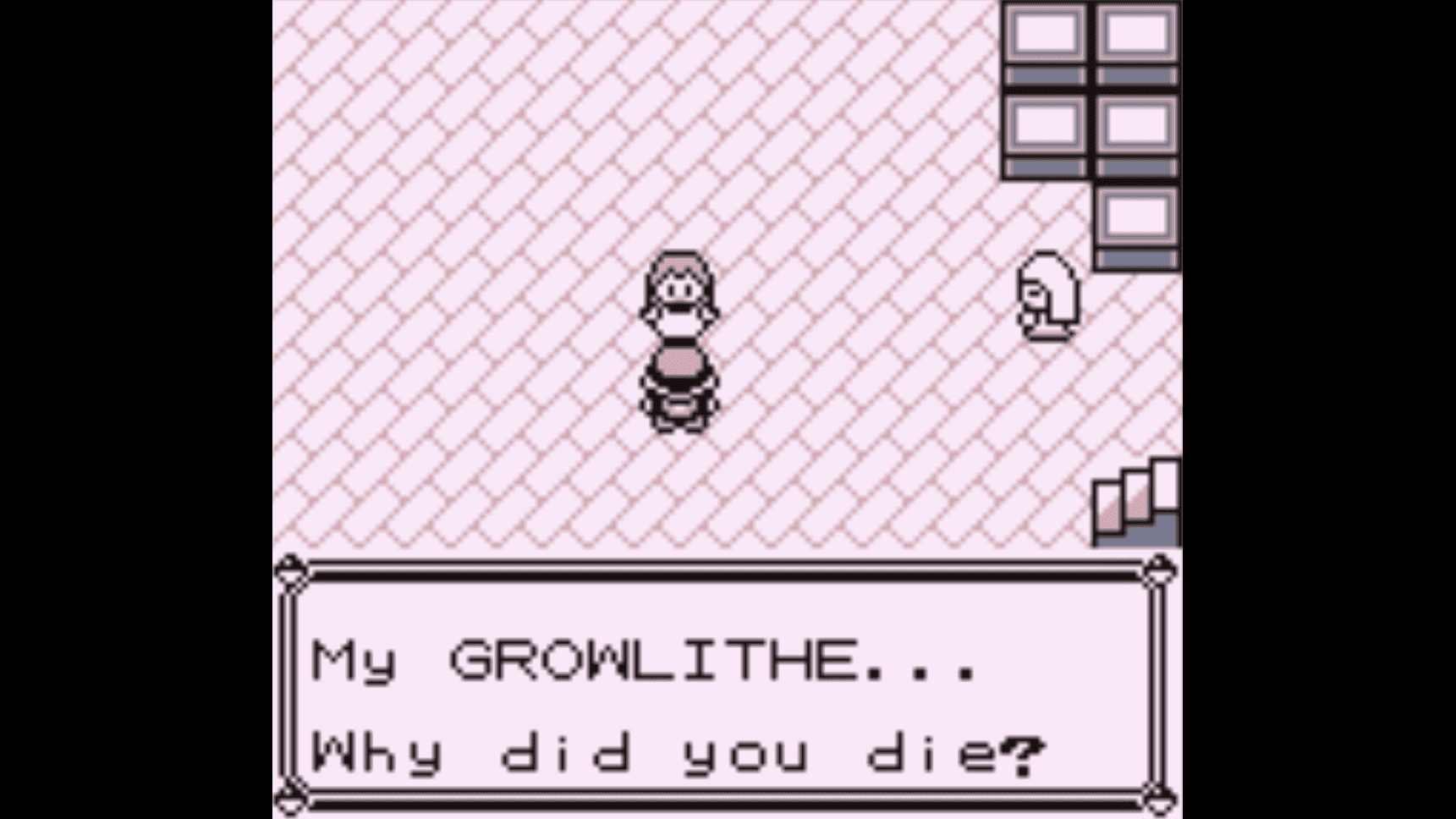
What I also love about the more RPG-inspired design is how nearly all the Pokèmon you encounter serve some sort of clear mechanical purpose. They’re not just cute little creatures you sic onto other people’s cute little creatures, they lean into the RPG design philosophy too, and often have a clear role in how the game is constructed. Brock’s Onix and Misty’s Starmie aren’t just each leader’s ace, they’re boss fights: who, should you know where to look later on, you can then adopt into your own team, Shin Megami Tensei-style. The Dragon and Ghost types, while they play rather oddly in further generations, make sense here when they each only have one representative. The Ghost type takes center stage for the one dungeon they populate: not only do you need to clear another dungeon entirely in order to perceive them in the first place, but their unconventional moves and their omnipresent nature make it mean that figuring out what does and what doesn’t work against them is key to making it up to the top of the Pokèmon Tower (Cubone, in part, functioning as a failsafe the player can use to otherwise bypass the dungeon).
The Dragon type’s notable strength compared to everything else makes sense when they’re exclusively used by the final member of the Elite 4, thus making sure what the player thinks is the final boss is not a battle you can merely cheese with type advantages — or by bringing in the level 78 Charizard you’ve exclusively used the whole game. Voltorb and Electrode are this game’s take on the Mimic. Mewtwo is this game’s take on your typical RPG superboss. Zapdos is the boss — and reward — of an optional dungeon, whereas its brethren in Articuno and Moltres are rewards for delving into the Seafoam Islands and Victory Road deeper than the player ever needs to.
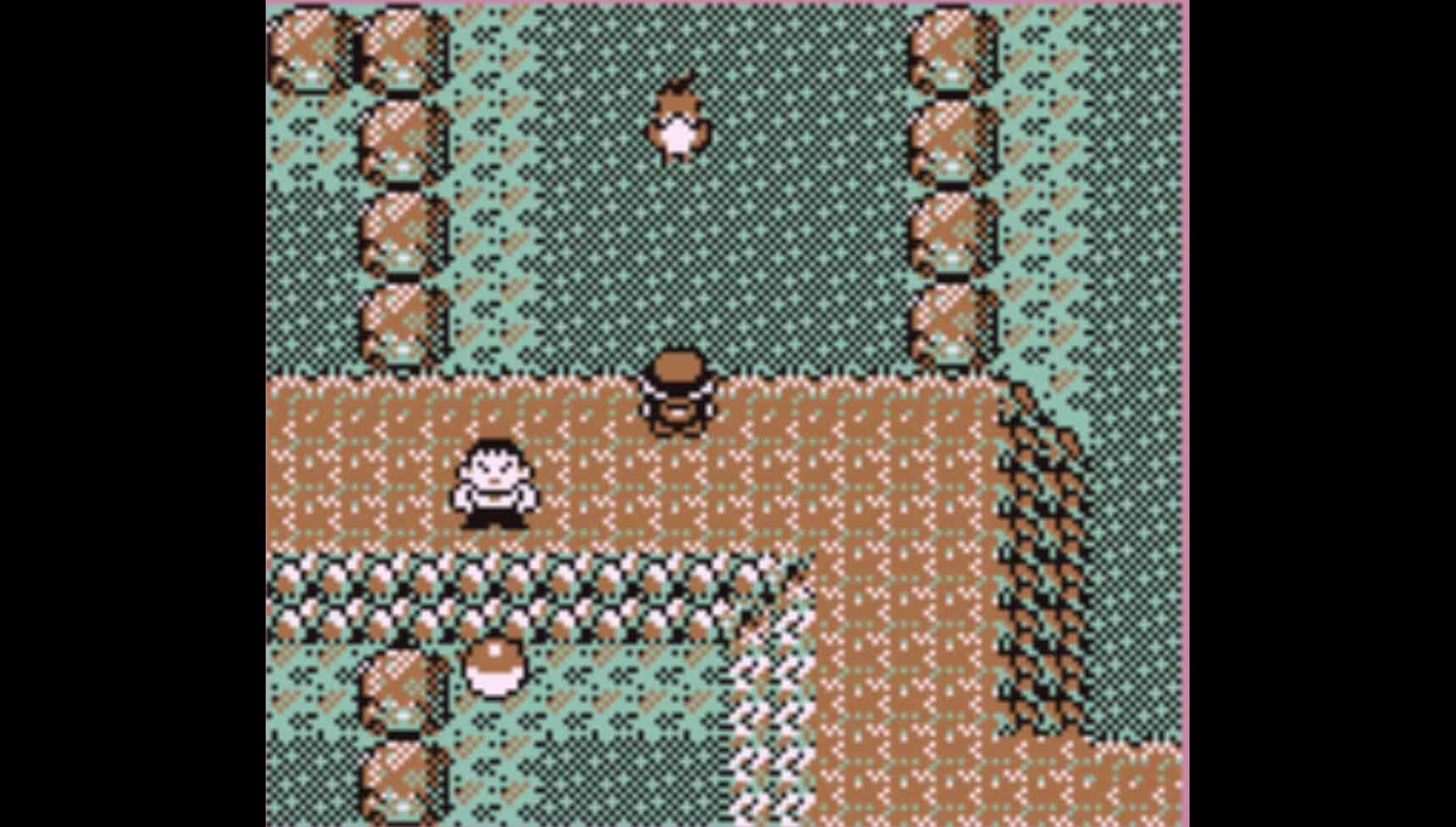
While mons like Butterfree and Beedrill emerge from their chrysalis early, and are rather powerful for the point in the game you get them, they both fall off curve hard once you start encountering other evolved mons, encouraging the player to vary and switch out their team, and imparting a lesson that sometimes growing up is letting go of what you used to cherish. In the same vein, while those two might be your Jeigan, other Pokèmon can function as your Frederick: while it quickly plateaus into merely being as good as the other mons in your party, Dugtrio is a godsend for the part of the game where you can stumble across him, going up to level 31 when most everything around you struggles to pass level 20, and singlehandedly allowing you to bypass what could be a difficult boss battle with Lt. Surge. Mankey (at least from Yellow onwards) is an early method of mitigating Brock should you have picked (or forced into) a starter that’s weak to his Rock types.
Rare Pokèmon like Porygon, Farfetch’d or Lickitung aren’t quite worth the effort it takes to obtain them, and that’s partially the point — they’re merely the more tricky steps in the process of catching them all, and the game is nice enough to put the Pokèmon more useful in terms of beating the game right in plain sight. While later generations would mostly shy away from this idea, the original set of Pokèmon games, even today, stands out for how it makes certain Pokèmon fill specific mechanical roles, and from a game design perspective it’s fascinating to see in action, to try and guess what the idea is behind each member of the original 151.
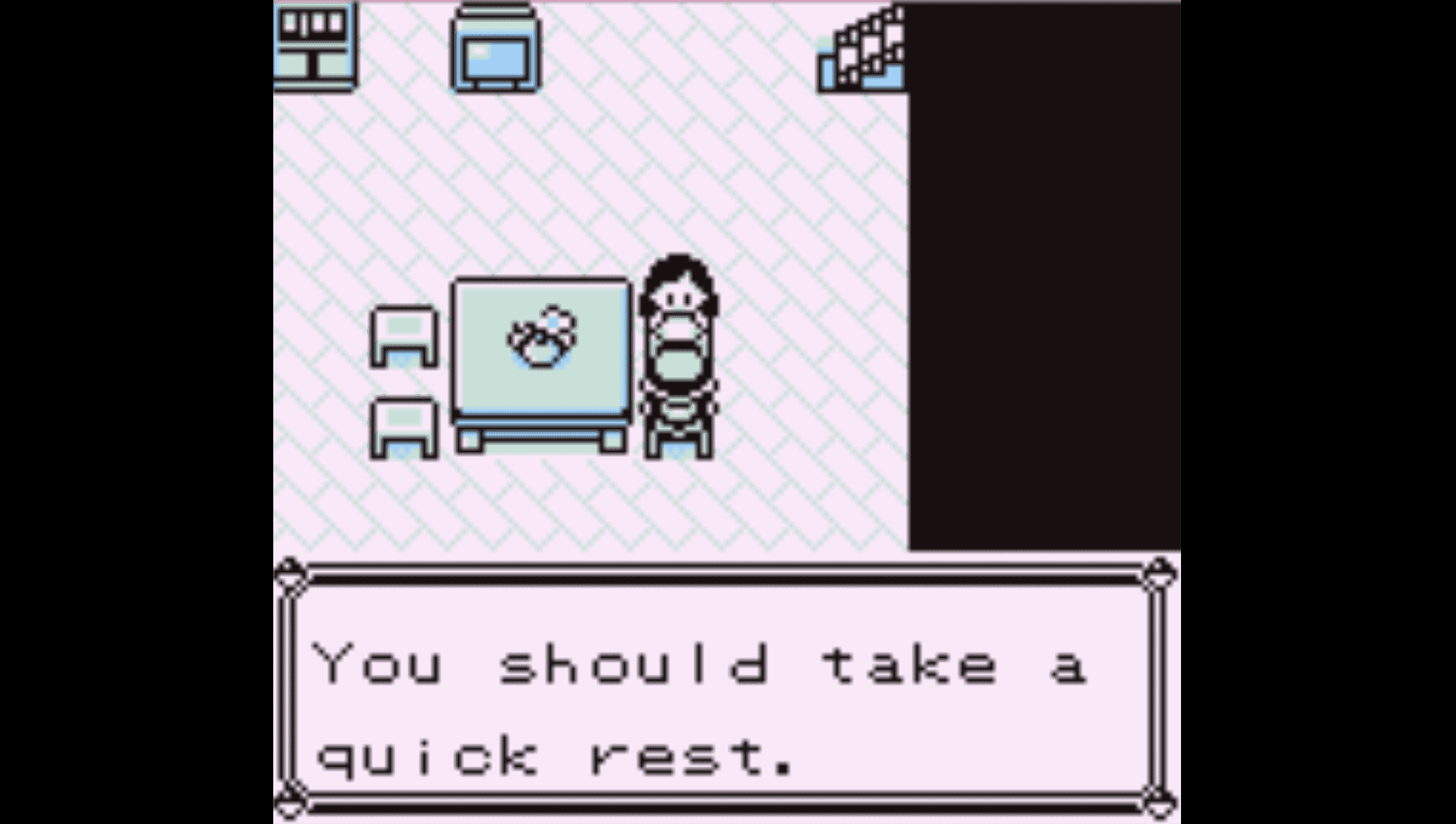
I like how the game counterbalances its kid empowerment plot with its loose coming-of-age themes. It’s super cool to imagine yourself at ten years old taking on and beating an entire criminal gang, but the game itself addresses that this doesn’t meaningfully stop them: even if you foil whatever caper they’re up to today, that’s not gonna keep them from doing whatever they’re going to do next. Even Giovanni, the last time you fight him, says that this won’t be the end of Team Rocket, and I think it’s this kind of childish storytelling of single-handedly saving the day by sailing through the bad guys’ hideout, combined with the reality of how organized crime is like the hydra growing new heads that you can’t ever meaningfully put in the ground which stands out as a really notable story beat. I love the loose implication that you’re growing older as you go through the region: your rival’s sprite continually changing each time you catch up with him, starting off as a little kid yet clearly looking so much taller by the final time the both of you fight.
I too love the way your path through Kanto more than likely loops you back to Pallet Town right near the end: what once was your whole world becoming just a pitstop, a quick moment to say hi to your mom before you’re off on your way to Viridian for your last gym badge. For games that don’t necessarily focus on a clear-cut plot beyond the premise — probably in part because of Kanto’s more open-ended progression — there’s a decent amount put into theming here, at least from what I could extrapolate. Maybe I’m just reading a lot from a little (though given Professer Oak saying “You have come of age! You’ve grown so much older since you left Pallet Town so long ago” upon beating the champion I’m fairly sure that theme was a conscious inclusion), but the fact that the game is capable of evoking those themes so continuously I felt was rather worth note, and a loose highlight of the experience.
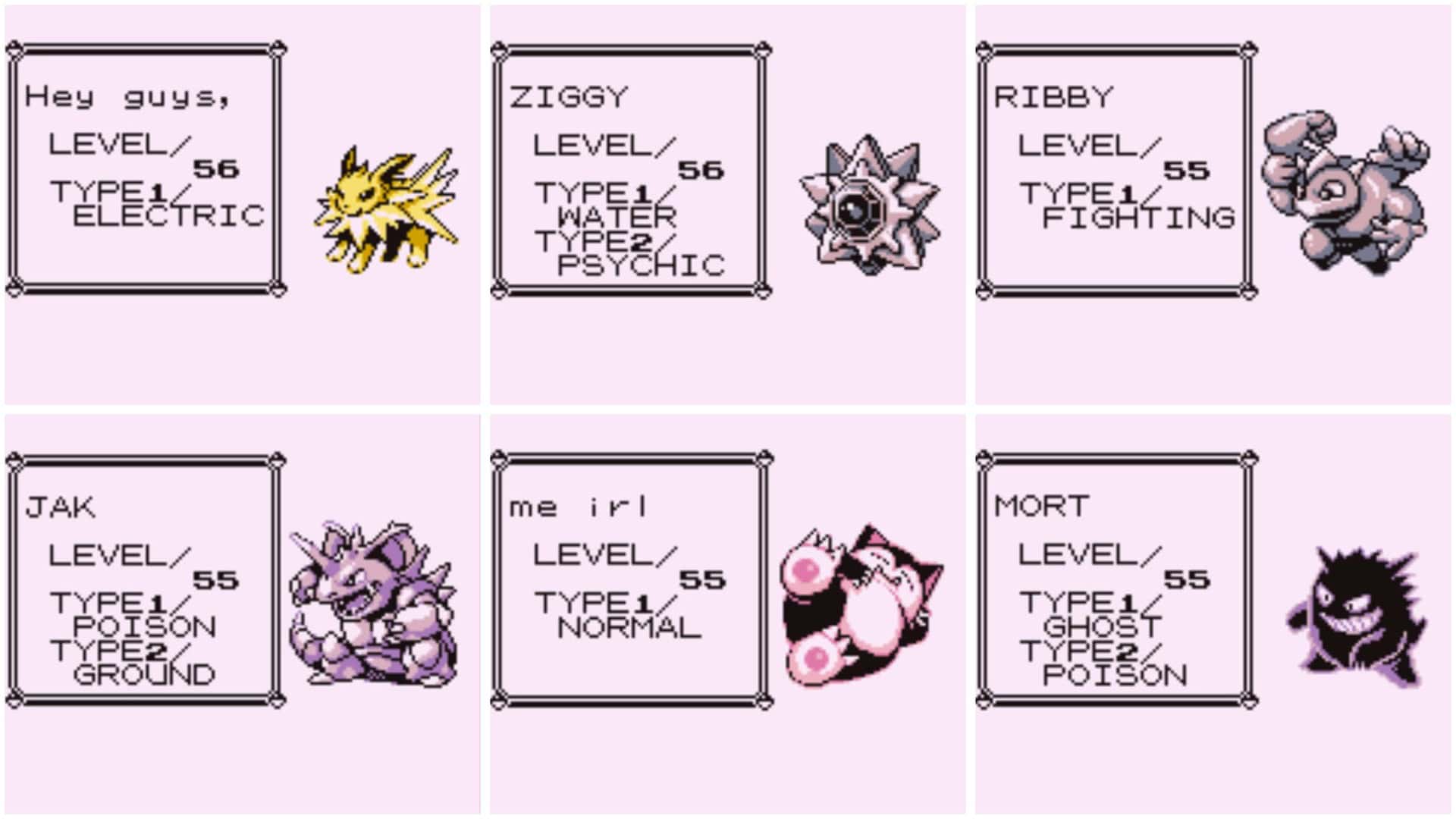
There are some other things I quite liked: the music is so continuously stellar, and iconic for a reason. Playing this on a system with proper backlighting let me see the towns in the hues they’re named after, providing a rather pretty visual shorthand of where the player is at any given time. Overall… I’m never quite going to have that special connection with this particular Pokèmon game that others might have — I never had a Game Boy as a kid, my first Pokèmon experience was a couple of generations down the line — so all I’m gonna see is something… with perhaps a bit less polish than what I’m typically used to with a Pokèmon game, but even then there’s so much here that’s so cool to look at. The non-linear, old-school RPG design. How each individual Pokèmon does something for the overall construction of the game. Narrative theming that perhaps takes a bit for the series to attempt again. Maybe it quote unquote hasn’t aged well, maybe it’s a little bit of a relic quality-of-life wise compared to the juggernaut it’d later become… but this was the thing that ignited the craze in the first place, and there was certainly a reason it managed to do so.
In terms of stuff I need to source, a non-zero amount of the stuff I talked about in the paragraph about Pokèmon performing certain game functions was stuff I learned apocryphally — stuff I’ve seen internet friends talk about in Skype and Discord chats between the ages of 14 and 20, but one thing I can specifically cite is the sentence regarding how Dugtrio works, which I got from this YouTube video. Check them out! They do great stuff. The detail regarding Dragon Warrior II’s specific influence was something I learned reading this article! Read it! There’s so much history I frankly never knew about these games until now.

 ObserverCrew Picks
 bserver
 bserver